
Table of Contents
- How Hail Deductibles Work in Auto Insurance
- Filing a Car Insurance Claim for Hail Damage
- Is Paintless Dent Repair Covered by Insurance
- How to Avoid Paying Insurance Deductibles
- The Impact of Hail Claims on Future Premiums
- What Happens If You Don’t Pay Your Deductible
- Frequently Asked Questions
Last Updated: September 27, 2026
How Hail Deductibles Work in Auto Insurance
Understanding hail repair deductibles, the amount you pay out of pocket when you file a claim for hail damage to your vehicle, is essential for every car owner. Your insurance company covers the rest of the repair costs, up to your policy limits. The key question many car owners ask is whether insurance covers these deductibles at all, and the answer is more nuanced than a simple yes or no.
Your comprehensive coverage protects against hail damage, but your deductible determines your actual financial responsibility. Understanding this helps you decide whether filing a claim makes financial sense.
Comprehensive Coverage and Deductibles
Comprehensive coverage protects against non-collision damage, including hail, theft, vandalism, and weather events (What is covered by collision and comprehensive auto insurance?). Your insurer pays for hail repairs after you meet your deductible.
Common deductible amounts are $250, $500, $1,000, or $2,500. The higher your deductible, the lower your monthly premium.
The important distinction: insurance does not cover your deductible itself. Your deductible is your share of the loss. Once you pay it, your insurance company covers the remaining repair costs. This is a critical misunderstanding many policyholders have.
Actual Cash Value vs. Repair Costs
Insurance companies assess hail damage using one of two methods: actual cash value or repair cost estimate. This distinction matters significantly for your out-of-pocket expenses.
Actual cash value (ACV) accounts for your vehicle’s age and depreciation. The insurance company pays based on what your vehicle is worth today, not its original purchase price.
Repair cost estimate is what repair shops charge to fix the damage. The insurance company typically pays based on the repair estimate (minus your deductible).
Here’s where it gets important: if repair costs exceed your vehicle’s ACV, your insurance company may declare your vehicle a total loss. In that case, they pay the ACV minus your deductible, and the vehicle becomes their property. You walk away with the settlement amount.
Filing a Car Insurance Claim for Hail Damage
Filing a claim for hail damage involves several steps. Following them carefully protects your interests and ensures you receive fair compensation.
Step 1: Document the Damage
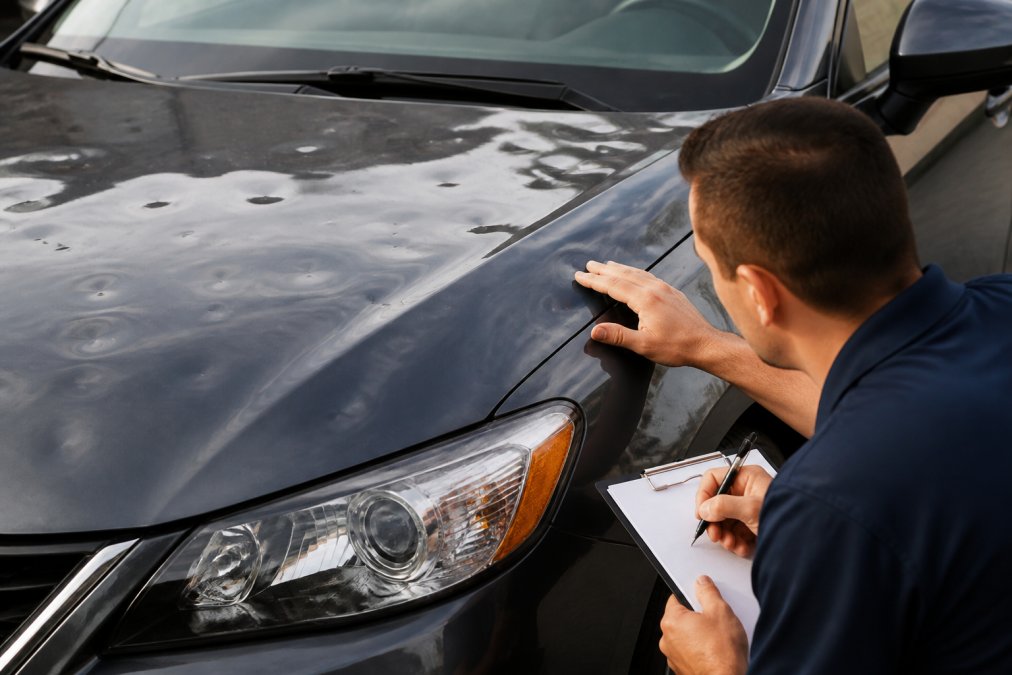
Photograph all visible hail damage from multiple angles, including close-ups of dents and wider shots showing the overall damage pattern.
Document the date and time the hail occurred. Weather reports often confirm hail events in your area, helping your insurer verify the claim.
Keep records of any temporary repairs you make to prevent further damage. Insurance companies appreciate evidence that you took reasonable steps to minimize loss.
Step 2: Contact Your Insurance Company
Call your insurance company’s claims line as soon as possible. Provide your policy number, vehicle information, and a brief description of the damage.
Your insurer will assign a claims adjuster to assess the damage and determine what your policy covers.
Ask your adjuster about your deductible amount, what your comprehensive coverage includes, and whether your insurer has preferred repair shops.
Step 3: Get a Repair Estimate
Your insurance company will order a damage assessment from an approved appraiser or repair shop to determine your claim payout.
You have the right to obtain your own repair estimate. If it differs significantly from the insurer’s, you can request a supplemental claim.
Paintless dent repair (PDR) is often cheaper than traditional body work for hail damage and preserves your vehicle’s factory finish. Ask whether PDR is an option.
Step 4: Receive Claim Adjustment
Once the adjuster completes their assessment, your insurance company issues a check for the repair estimate (or ACV if it’s lower) minus your deductible.
You can cash the check and handle repairs yourself, or the insurer can issue payment directly to your repair shop.
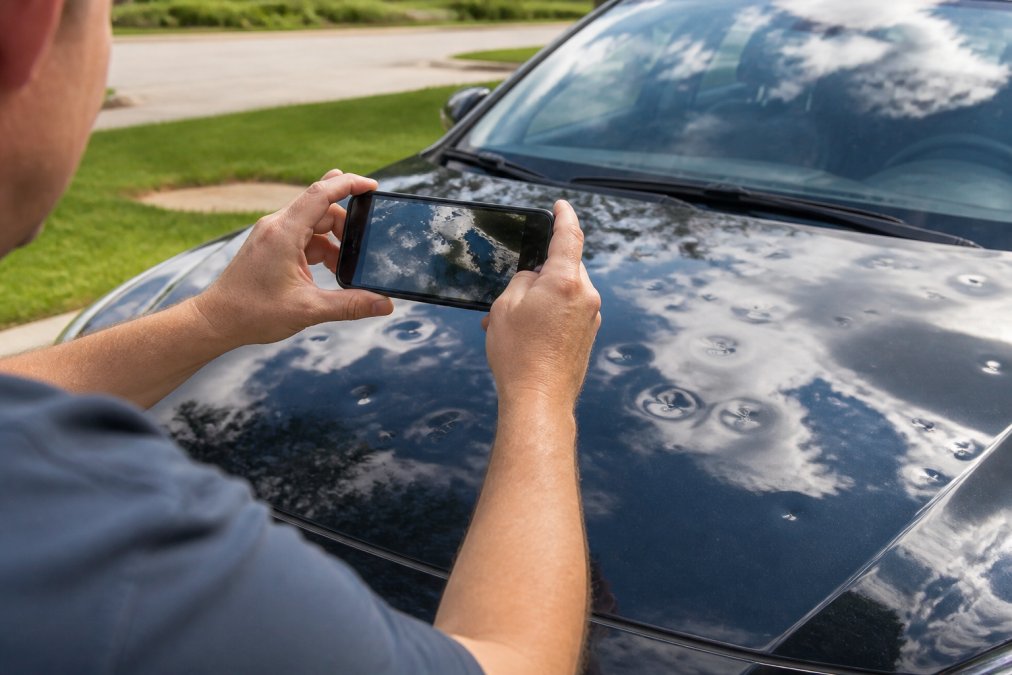
Keep all documentation. If repairs reveal additional damage, you can file a supplemental claim with photos and updated estimates.
Is Paintless Dent Repair Covered by Insurance
Paintless dent repair is covered by comprehensive insurance for hail damage, which is weather-related and not collision damage.
PDR is often preferred for hail damage because it costs less and preserves your factory finish. Your deductible remains the same, but the insurance company’s payment is smaller.
If your repair estimate is $4,000 using traditional methods but $2,500 using PDR, your insurance company pays based on the lower estimate, helping you preserve policy limits.
Insurance companies approve PDR when certified technicians document it will fully restore your vehicle. If PDR cannot address all damage, traditional repairs will be necessary.
Ask your repair shop whether they’re certified in paintless dent repair and whether they work directly with insurance companies. Shops experienced with insurance claims often simplify the approval process.
How to Avoid Paying Insurance Deductibles
Several strategies can legitimately reduce or eliminate your out-of-pocket deductible costs. However, it’s equally important to understand which approaches are legal and which expose you to serious liability.
Legitimate Deductible Waiver Programs
Some insurance companies offer deductible waiver programs (disappearing deductible or zero deductible options) that waive your deductible if you meet certain conditions approved by your insurer in advance.
The Deductible Absorption Trap: Why “No Deductible” Repair Shops Are Risky
Many repair shops advertise “We waive your deductible” or “We absorb your deductible.” In practice, this often constitutes insurance fraud, and you, the policyholder, bear the legal risk.
Calculating Your Break-Even Point (The Right Way)
Before filing a claim, calculate whether repair costs justify paying your hail repair deductibles and account for long-term premium impact.
Working with Repair Shops That Handle Insurance (Legitimately)
Reputable repair shops experienced with insurance claims simplify the entire process. They understand policy coverage, deductible requirements, and claims procedures.
Legal Risk Alert: If a repair shop offers to waive your deductible, report them to your state’s insurance commissioner or the FBI’s Internet Crime Complaint Center (IC3). Do not use their services, even if the offer seems attractive. The legal and financial consequences far outweigh any short-term savings.
The most stress-free and legally sound approach is partnering with a certified repair shop that manages insurance communication transparently and never inflates estimates. Legitimate deductible waivers come from your insurer, not the repair shop.
The Impact of Hail Claims on Future Premiums
Filing a hail claim can affect your insurance premiums and renewal status, though the impact varies significantly by insurer, your claims history, and whether you have claim forgiveness protections.
Why Hail Claims Are Treated Differently Than Collision Claims
Insurance companies categorize hail damage as a comprehensive claim (“other than collision”), not a collision claim. This distinction matters for your premium.
How Much Will Your Premium Increase?
If your insurer applies a surcharge for a hail claim, the increase typically ranges from 5% to 15% of your annual premium, depending on your insurer’s underwriting philosophy, claims history, location, coverage limits, and driving record.
Claim Forgiveness Programs: Your Best Protection
Many insurers offer claim forgiveness (accident forgiveness or claim waiver) as an optional add-on or automatic benefit. Your first claim within a set period (often 3-5 years) will not increase your premium.
Multiple Claims: The Real Risk
The biggest premium impact comes from multiple claims within a short period. Filing a second claim within six months signals chronic risk to your insurer.
How Long Does a Surcharge Last?
Most insurers apply surcharges for three to five years from the date of the claim. After that period, the claim ages off your record.
Non-Renewal Risk: The Scenario to Avoid
If you file two or more hail claims within three years, your insurer may non-renew your policy. You’ll receive a non-renewal notice 30-60 days before expiration, must find new coverage immediately, and will be placed in the assigned risk pool if no standard insurer will take you.
Premium Impact Summary: A single hail claim may increase your premium by 5-15% for 3-5 years. A second claim within three years can trigger non-renewal and placement in the assigned risk pool, increasing your premiums by 50-100%. Always calculate whether the repair cost justifies the long-term premium impact before filing.
What Happens If You Don’t Pay Your Deductible
If you refuse to pay your deductible, your insurance company will not release payment to the repair shop. The claim remains suspended until you pay.
Frequently Asked Questions
Do I have to pay my deductible for hail damage?
Yes, in most cases you pay your deductible when you file a claim for hail damage covered under comprehensive coverage. Your deductible is your out-of-pocket responsibility before insurance pays the remaining repair costs. However, some insurers offer deductible waiver programs or zero-deductible options for hail damage specifically. Check your policy details or contact your insurer to see if you qualify for a waiver program that eliminates this cost entirely.
Is paintless dent repair covered by insurance for hail damage?
Yes, paintless dent repair (PDR) is typically covered under comprehensive insurance policies when used to repair hail damage. Insurance companies often prefer PDR because it costs less than traditional body work and preserves your vehicle’s factory finish and resale value. Your repair shop will submit the estimate to your insurance company for approval. The repair is covered under your comprehensive deductible, meaning you pay your deductible amount and insurance covers the rest of the approved repair cost.
How do I know if filing a hail damage claim is worth it financially?
Calculate your break-even point by comparing the total repair cost against your deductible and any potential premium increases. If repairs cost $3,000 and your deductible is $1,000, you’d pay $1,000 out of pocket. Check if your insurer offers deductible waivers for hail damage, which could eliminate that cost. Also consider whether your vehicle’s value justifies the claim, if repairs approach 70-80% of your vehicle’s actual cash value, insurers may declare it a total loss. Request a quote from your repair shop before deciding.
Can claiming hail damage increase my insurance premiums?
Hail damage claims typically do not increase your premiums because hail is considered an act of nature (a covered peril) rather than a fault-based incident. Most insurers treat comprehensive claims more favorably than collision or liability claims. However, premium impacts vary by insurer and your specific policy. Contact your insurance company directly to confirm how a hail claim would affect your rates before filing. Some insurers offer claim forgiveness programs that prevent premium increases for your first claim.
