
Last Updated: November 6, 2026
Quick Summary
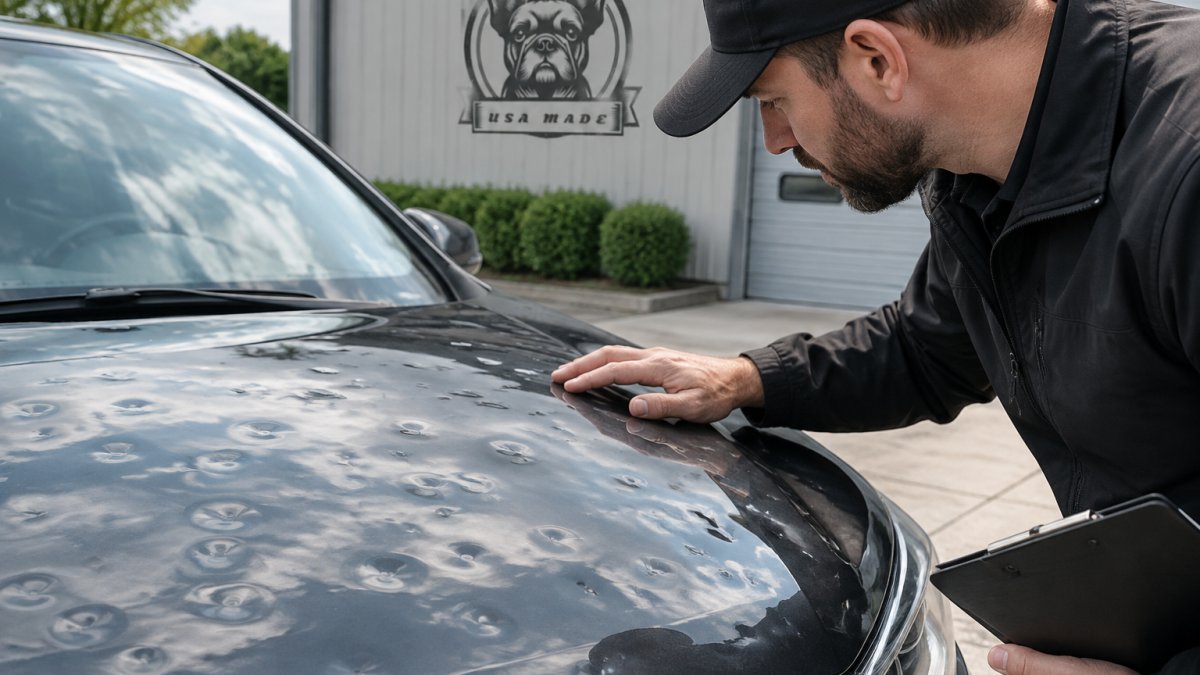
The best way to inspect a car for hail damage is a slow, panel-by-panel walkaround under controlled light, working from front to rear and then checking the roof and glass. Park in shade or on an overcast day, use an angled LED light, and run your hand over each panel to catch shallow dents your eyes skip.
- Direct sun hides shallow dents, so park in shade or wait for an overcast day.
- Work in a fixed order: hood, fenders, doors, roof, trunk, bumpers, then glass and trim.
- Hold an LED light low and to the side so the beam skims across the paint.
- Hail dents are small, round, and shallow, and cluster on hood, roof, and trunk.
- Wipe suspect areas with a clean rag and recheck under angled light before recording.
Table of Contents
- How to Check for Hail Damage on a Used Car
- Your Hail Damage Inspection Checklist
- Techniques That Reveal Dents: Angled Light and Reflection Lines
- Hidden Hail Damage on a Car: What You Can Miss
- Documenting Hail Damage for a Car Insurance Claim
- Book a Free Hail Damage Inspection with Hail Dawgz
- Frequently Asked Questions
How to Check for Hail Damage on a Used Car
Hail damage is easy to spot when a storm leaves golf-ball dents across a hood. It gets harder when the dents are small, shallow, or spread thin.
At Hail Dawgz, our technicians have worked on hail-damaged vehicles for more than 20 years.
Below, we show you exactly how to check every panel, glass, and trim piece, and how to tell hail dents from parking lot dings.
Your Hail Damage Inspection Checklist
A hail damage inspection checklist turns a vague “does this look okay?” into a repeatable process. The goal is to inspect every panel, glass, trim, and light in the same order every time, under conditions that make shallow dents visible.
Set the inspection conditions first
Before you touch the car, control the light. Direct sun hides shallow dents because the surface is already bright and the shadows are short. Park in shade, under a canopy, or wait for an overcast day. If you must inspect outdoors on a sunny day, position the car so the panel you are checking is in shadow and use your own light source.
Bring these tools:
- A bright LED flashlight or a work light with a focused beam.
- A clean microfiber rag to wipe dust and water spots.
- A straight edge, such as a ruler or a credit card, for checking panel gaps and trim fit.
- A phone or camera for photos.
- A notebook or notes app for recording affected panels.
Give yourself enough time to inspect each panel carefully. Rushing is how people miss damage.
Work panel by panel in a fixed order
Start at the front and work toward the rear, then check the roof and glass. A common pattern is:
- Hood, including the front edge and cowl area.
- Front fenders and the area above the wheel arches.
- Front doors, then rear doors, checking the upper door frames and beltline.
- Roof, including the rails and any sunroof panel.
- Trunk lid or liftgate, plus the rear quarter panels.
- Rear bumper cover and the area around the taillights.
- Glass, mirrors, lights, and trim.
For each panel, stand at a low angle and look across the surface rather than straight down at it. Dents show up as small dips that break the smooth line of the paint.
Watch out: a clean-looking roof can hide tiny dents that only appear at the right angle. Never skip the roof just because it is hard to reach, and do not climb on the car to check it.
Check glass, mirrors, lights, and trim
Glass damage is the most serious hail finding, so check it before you finalize your notes. Look for chips, star cracks, and small pits on the windshield, rear glass, and side windows. Run a fingernail across any suspect spot.
Then check the mirrors, headlights, taillights, and trim. Hail can crack mirror housings, pit light lenses, and dent chrome or plastic trim. Record these parts even if the damage looks minor.
Record what you find as you go
Do not rely on memory. Note the panel, the approximate number of dents, and whether the paint is chipped, cracked, or intact. Take one wide photo and one close-up photo of each affected area with the light held at an angle. This record becomes useful evidence if you are buying the car or filing a claim.
Follow this fixed order so no panel, glass, or trim piece gets skipped.
| Step | What to check |
|---|---|
| 1 | Hood, including front edge and cowl area |
| 2 | Front fenders and area above wheel arches |
| 3 | Front doors, then rear doors, upper frames and beltline |
| 4 | Roof, including rails and any sunroof panel |
| 5 | Trunk lid or liftgate, plus rear quarter panels |
| 6 | Rear bumper cover and area around taillights |
| 7 | Glass, mirrors, lights, and trim |
Techniques That Reveal Dents: Angled Light and Reflection Lines
Angled light is the single most useful tool in a hail inspection. Hold your LED light low and to the side of a panel, so the beam skims across the paint instead of hitting it straight on.
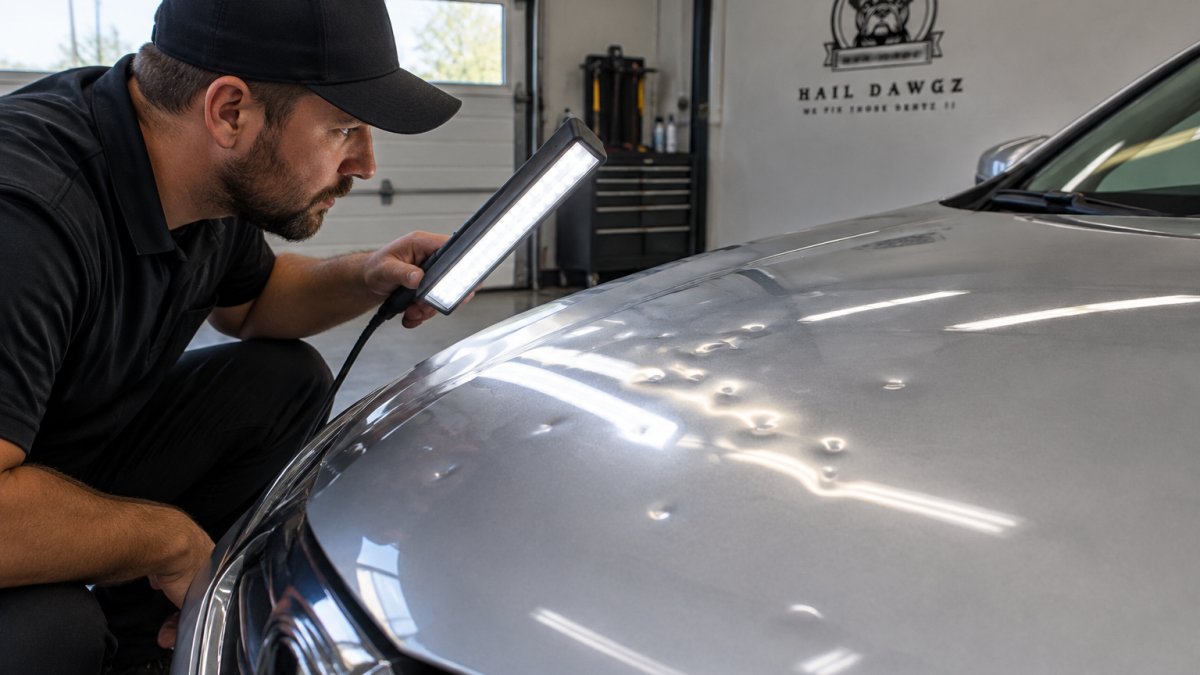
Reflection lines work the same way. Pick a straight edge in the reflection, like a building roofline or a light pole. Move your head slowly and watch how that line bends. A dent makes the line wobble or break.
Hidden Hail Damage on a Car: What You Can Miss
Hidden hail damage on a car usually sits in three places: the roof, the lower rocker panels, and under trim. The roof is the biggest blind spot because most people never look up at it. Rocker panels and the lower edges of doors catch hail that bounces or blows sideways, and trim pieces can hide small dents underneath.
Use shape, distribution, and paint condition as clues
Distinguishing hail dents from parking damage or manufacturing imperfections is where most DIY inspections go wrong. Three clues help:
- Shape. Hail dents tend to be small, round, and shallow, with soft edges. Parking dents are often larger, single, and paired with a crease or paint transfer. Manufacturing imperfections show up as uniform, repeating ripples rather than random clusters.
- Distribution. Hail damage clusters in irregular groups across flat, horizontal surfaces such as the hood, roof, and trunk. Parking damage is usually isolated to one spot, often on a door or bumper where another vehicle or object made contact.
- Paint condition. Parking dents more often chip, crack, or scuff the paint, and you may see paint transfer from another object.
Know when reflections and dirt are misleading
Reflections can make a straight panel look wavy, and dirt or water spots can look like pits. Wipe each suspect area with a clean rag and recheck under angled light before you record it.
Watch out: poor lighting, heavy dirt, or an earlier repair can make a panel look damaged when it is not, or hide damage that is there. If you cannot get a clear view, note it and plan a second inspection in better conditions.
Recognize the limits of a DIY check
Some damage is not visible without removing trim or using a dent gauge. If you find clusters on the roof or suspect hidden damage under trim, a professional inspection is the reliable next step. If you are worried about what missed damage means for resale, it helps to know whether hail damage will lower your car’s value before you make an offer.
Documenting Hail Damage for a Car Insurance Claim
Documentation decides how smoothly a claim goes. Photograph each damaged panel with the light held at an angle, and include a wide shot plus a close-up of every area. Note the date, location, and weather. Save your photos in one folder.
Your insurance adjuster will compare your photos to their own inspection, so clear images protect you. If you want a deeper walkthrough, our guide on how to document hail damage for insurance claims covers every step. For the full claims process, read our complete guide to hail damage insurance claims.
Book a Free Hail Damage Inspection with Hail Dawgz
A DIY check tells you whether damage exists. A professional inspection tells you what it will take to fix it. At Hail Dawgz, we offer free hail damage inspections and work directly with all major insurance companies.
Have questions before you schedule? Our FAQ page answers the common ones, from deductibles to timelines. When you are ready, book your free hail damage inspection and get a clear plan for your repair.
Frequently Asked Questions
How can you tell if a dent was caused by hail?
Hail dents are typically small, round, and clustered in irregular patterns across upward-facing panels like the hood, roof, and trunk. They often appear in groups of varying sizes and depths, unlike a single parking lot ding. Paint may be chipped or cracked around the impact point. If you see a uniform row of dents along a door edge, that points to parking damage rather than hail. When in doubt, a professional inspection can confirm the cause.
Where should you look for hidden hail damage on a car?
Check the roof, especially near roof rails and the top of the windshield, where dents are easy to overlook from ground level. Look along body lines, door edges, and the trunk lid. Open the doors and inspect the inner edges and jambs. Also check the hood near the cowl, the tops of fenders, and the area around the gas cap. Use angled light and view panels from a low horizontal angle to catch shallow dents that disappear in direct sunlight.
Is it worth filing an insurance claim for hail damage?
It depends on your deductible and the repair cost. If the estimated repair exceeds your deductible, filing a claim usually makes sense. Comprehensive coverage typically covers hail damage, but confirm your policy details. Document the damage with photos and get a professional estimate before deciding. A free inspection from a shop that works with insurers can help you weigh the numbers without guessing.
What is the best way to inspect a car for hail damage?
Start with a clean, dry vehicle in shaded or diffused light. Walk around the car and view each panel from a low horizontal angle, using a bright LED light to sweep across the surface. Check the hood, roof, trunk, doors, and side panels for small, round dents and paint cracks. Include glass, mirrors, lights, and trim. Document any findings with photos. If you spot damage, have a professional inspection to confirm severity and repair options.
Hail season does not wait, and small dents become costly problems when they sit. Let our certified technicians inspect your vehicle, document the damage, and handle the insurance side for you. Get started with Hail Dawgz and get your car back to its pre-damage condition.

