
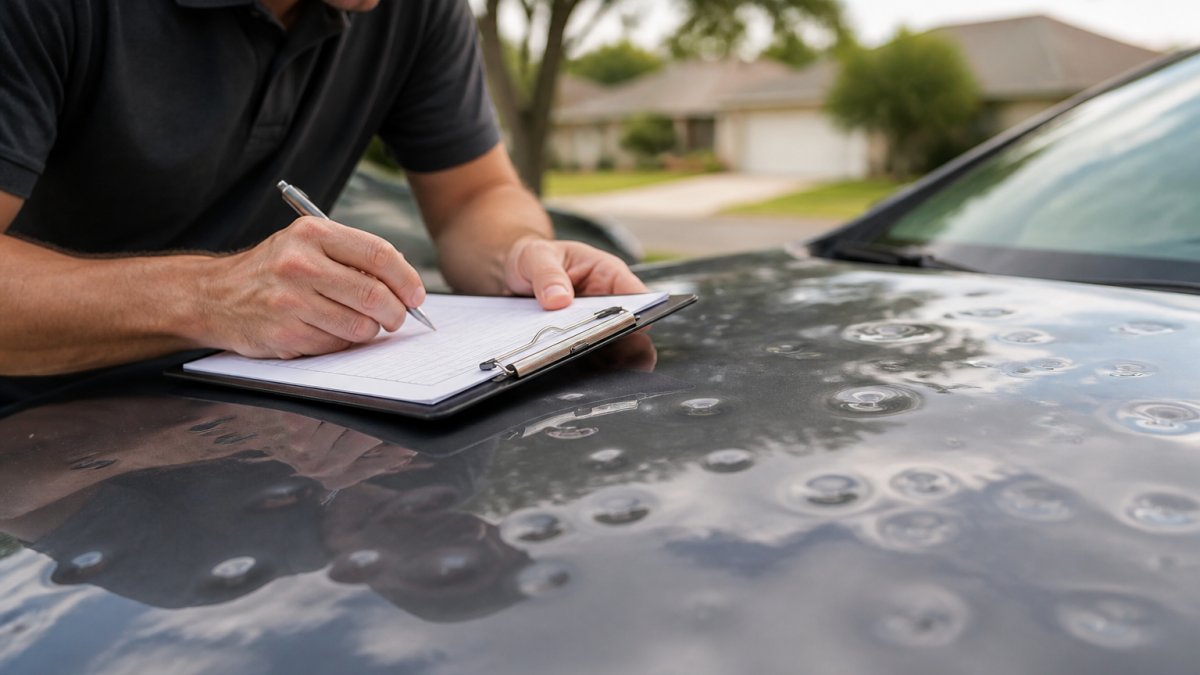
Table of Contents
- What Happens Immediately After Hail Damage
- How to File a Car Insurance Claim After Hail Damage
- Understanding Your Hail Damage Insurance Claim Deductible
- Documenting Damage: Photos, Videos, and Evidence
- Working With Your Insurance Adjuster and Repair Estimates
- Hail Damage Claim Timeline and What to Expect
- When Claims Are Denied or Underestimated
- Frequently Asked Questions
Last Updated: October 7, 2026
What Happens Immediately After Hail Damage
When hail strikes your vehicle, the first hours matter most. Your immediate actions determine whether the insurance process goes smoothly, so documentation becomes critical the moment the storm passes.
Stop and assess safety first. If you’re driving when hail hits, pull over and wait for the storm to pass. Then inspect your vehicle from a distance for dents, broken glass, and damaged trim.
Contact your insurance company within 24 to 48 hours, as most policies require prompt notification. Have your policy number ready and provide the damage location, storm date and time, and a description of affected areas. Your insurer will explain next steps and may schedule an adjuster visit.
Prevent further damage immediately. Cover broken windows or openings where water could enter, and move your vehicle to a garage, carport, or under a tarp. This protects against additional weather damage and shows your insurer you’re taking reasonable precautions.
Document everything before touching anything. Take timestamped photos and videos: the overall vehicle first, then close-ups of dents, cracks, and damage patterns. Store these files securely by emailing them to yourself or uploading to cloud storage.
How to File a Car Insurance Claim After Hail Damage
Filing a hail damage insurance claim follows a structured process, and understanding each step prevents delays and denials.
Step 1: Gather Your Documentation
Collect your insurance policy, vehicle registration, photos, and videos. Write down the date, time, and location of the hailstorm, plus any weather reports or news coverage that corroborate a documented storm.
Step 2: Contact Your Insurance Company
Call your insurer’s claims line or file online. Provide your policy number, vehicle identification number (VIN), and a brief description of the damage.
Step 3: Schedule the Damage Inspection
Your insurer will assign an adjuster to inspect your vehicle, typically within 3 to 7 days.
Step 4: Prepare for the Adjuster’s Visit
Have your documentation ready and show the adjuster your photos and videos. Point out all visible damage, including minor dents you initially missed.
Step 5: Receive the Damage Assessment
After inspection, the adjuster prepares a repair cost estimate that forms the basis of your payout, using industry pricing guides or repair shop quotes.
Step 6: Review and Approve the Estimate
Examine the adjuster’s estimate carefully: does it match the damage you observed and include all affected areas?
Step 7: Authorize Repairs and Receive Payment
Once you approve the estimate, your insurer issues payment. At Hail Dawgz, we work directly with insurance companies to simplify this process, often allowing customers to proceed with repairs while paperwork finalizes.
Understanding Your Hail Damage Insurance Claim Deductible
Your deductible is the amount you pay out of pocket before insurance covers the rest. Understanding how it applies to hail damage claims helps you decide whether filing is worthwhile.
How Deductibles Work
If your deductible is $500 and repair costs total $3,000, you pay $500 and insurance pays $2,500.
Some policies have separate deductibles for different damage types. Comprehensive coverage, which covers hail, often has its own deductible distinct from collision. Review your policy to confirm your amounts.
Deductible Math: Is Filing Worth It?
Calculate whether filing makes financial sense: add up estimated repair costs, subtract your deductible, and ask if the remainder justifies a claim.
However, if repairs cost $5,000 and your deductible is $500, you save $4,500 by filing. This scenario justifies the claim process.
Deductible Waivers and Alternatives
Some insurers offer deductible waivers or loyalty discounts. Ask your agent about options: a few policies waive the deductible if you use an in-network repair shop, while others reduce deductibles for customers with clean claims histories.
At Hail Dawgz, our zero out-of-pocket repair model works with your insurance to minimize what you pay. We handle the claims process directly with insurers, often reducing or eliminating your out-of-pocket costs.
Documenting Damage: Photos, Videos, and Evidence
Documentation is your strongest tool in hail damage insurance claims. Photos and videos create an irrefutable record of damage extent and severity, protecting you if disputes arise.
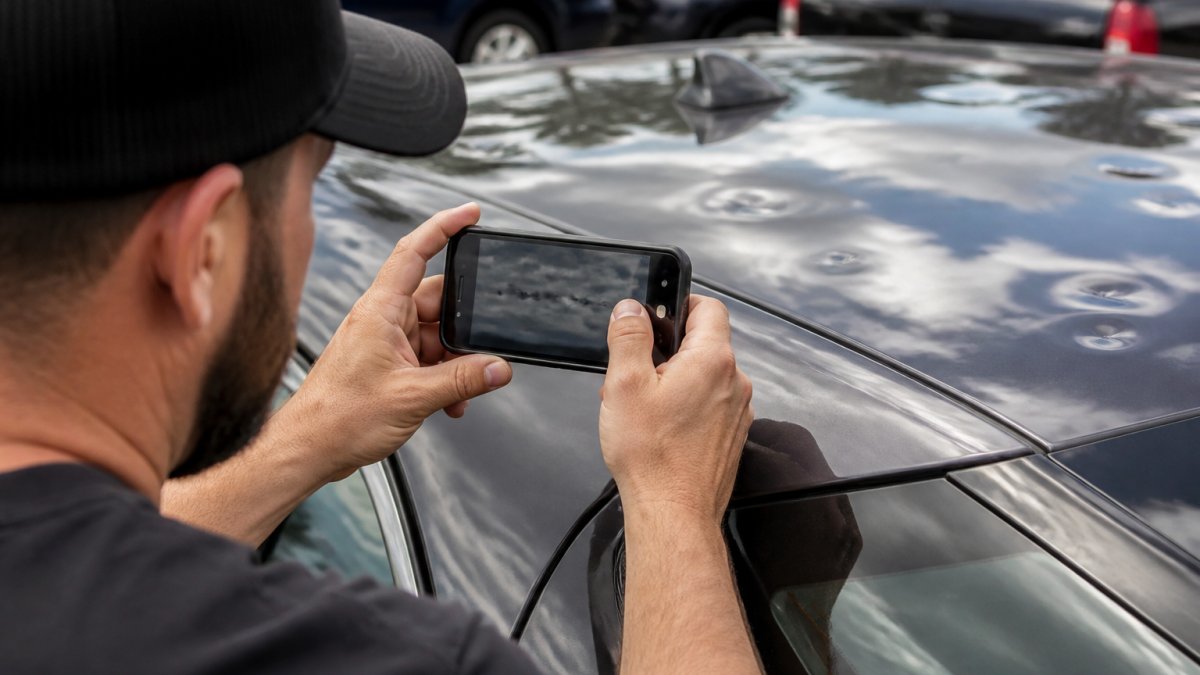
Photograph Every Affected Area
Start with wide shots showing overall condition and damage pattern, then photograph each damaged panel individually, including the roof, hood, doors, and windows. Hail creates distinctive round dents, so capture these patterns clearly.
Use natural daylight, since shadows can obscure dents, and take multiple photos of the same area from different angles and distances.
Include Timestamp Evidence
Ensure your photos and videos display timestamps. Most smartphones automatically embed timestamps in image metadata, but verify this in your camera settings.
Record Video Documentation
Video captures damage in context. Walk around your vehicle slowly, narrating the damage pattern, affected areas, and severity. Keep videos under 3 minutes for easy sharing with your insurer.
Preserve Original Files
Don’t edit, crop, or filter photos. Insurance adjusters need unaltered images. Store originals on cloud storage, email them to yourself, and back them up on your computer.
Document Pre-Existing Condition
If your vehicle had prior damage unrelated to the hailstorm, document it separately to prevent disputes about what the hail caused versus pre-existing conditions.
Working With Your Insurance Adjuster and Repair Estimates
Your relationship with the insurance adjuster shapes your entire claims experience. Understanding the adjuster’s role and how repair estimates work prevents miscommunication and ensures fair assessment.
What Adjusters Actually Do
Insurance adjusters are trained to evaluate damage objectively, neither advocate nor adversary.
Adjusters follow specific protocols. They photograph damage, document measurements, and reference pricing guides that account for labor costs, parts, and market rates. Their estimate becomes the insurance company’s initial offer.
Preparing for the Adjuster Visit
Schedule the inspection at a convenient location and bring your documentation, photos, videos, weather reports, and policy.
Be present during the inspection. Answer questions about the vehicle’s condition before the storm and any previous damage.
Understanding the Repair Estimate
The adjuster’s estimate breaks down repair costs by component: dent removal, paint, glass replacement, trim repair, and labor. Review each line item against the damage you observed.
Estimates vary based on repair method. Paintless dent repair (PDR) costs less than traditional body work but only works for certain damage types.
Challenging an Underestimate
Many insurers allow supplemental claims when repairs reveal hidden damage not visible during the initial inspection. This happens frequently with hail damage, dents become apparent only during the repair process.
Hail Damage Claim Timeline and What to Expect
Understanding the timeline from damage to final payment helps you plan repairs. Most hail damage claims follow a predictable sequence, though timing varies by insurer and severity.
| Stage | Typical Timeline | What Happens |
|---|---|---|
| Notification to Inspection | 3-7 days | You report damage; insurer schedules adjuster visit |
| Inspection to Estimate | 5-10 days | Adjuster inspects vehicle and prepares damage assessment |
| Estimate Approval | 1-3 days | You review estimate; approve or request revision |
| Payment Processing | 3-7 days | Insurer issues payment after approval |
| Repairs | 5-30 days | Repair shop completes work based on estimate |
| Final Inspection | 1-3 days | Insurer may inspect completed repairs |
Day 1-2: Immediate Notification
Call your insurer within 24 to 48 hours of discovering damage and ask about next steps. Some insurers offer same-day or next-day appointments after major storms.
Day 3-10: Adjuster Inspection
The adjuster visits to assess damage, the most critical step. Bring your documentation and be present to answer questions; inspections typically take 30 minutes to 2 hours.
Day 10-20: Estimate Review and Approval
You receive the written estimate. Review it against your documentation; if you agree, sign and return it, and if you disagree, contact your insurer or request a re-inspection.
Day 20-30: Payment and Repair Authorization
Once approved, your insurer processes payment. Depending on your policy, you may receive a check, payment directly to the repair shop, or both. At Hail Dawgz, we coordinate directly with insurers to expedite this process, often allowing repairs to begin while final paperwork processes.
Day 30-60: Repairs and Completion
The repair shop completes work per the approved estimate. Paintless dent repair takes days, while extensive body work and repainting may take weeks. Your insurer may schedule a final inspection to verify the work.
When Claims Are Denied or Underestimated
Not every hail damage claim proceeds smoothly. Denials and underestimates happen, but understanding your rights and the appeal process protects your interests.
Common Denial Reasons
Insurers deny claims for specific reasons: collision-only policies don’t cover hail, pre-existing damage may be excluded, and missed filing deadlines can result in denial.
Review your policy denial letter carefully. It must specify the reason. If the reason seems incorrect or unfair, you have grounds to appeal.
Underestimate Disputes
Submit the independent estimate to your insurer with a written explanation of discrepancies.
The Appeal Process
Most insurers have formal appeals procedures. Request an appeal in writing with supporting documentation: photos, videos, independent repair estimates, and explanations of disagreements.
Some states require insurers to respond to appeals within specific timeframes. Check your state’s insurance regulations.
When to Seek Professional Help
If your claim is denied and you believe the denial is unjust, consult an attorney specializing in insurance disputes, particularly for high-value claims or suspected bad faith.
At Hail Dawgz, our experience navigating insurer relationships often helps customers resolve underestimates and denials.
Hail storms leave your vehicle vulnerable, and the claims process can feel overwhelming when you’re managing damage, documentation, and negotiations at once.
At Hail Dawgz, we simplify this process.
Frequently Asked Questions
What should I do first after hail damages my car?
Move your vehicle to a safe location away from further weather exposure, then document all visible damage with timestamped photos and videos. Contact your insurance company within 24-48 hours to report the hail damage and start the claim process. Avoid temporary repairs beyond basic weatherproofing until your adjuster completes the inspection. Keep all documentation and receipts for any emergency protective measures you take.
How does my hail damage insurance claim deductible affect what I pay?
Your deductible is the amount you pay out of pocket before insurance covers repair costs. If repair estimates total $5,000 and your deductible is $1,000, you pay $1,000 and insurance covers $4,000. Some comprehensive policies cover deductibles for hail damage, while others apply the standard deductible. Review your specific policy language or ask your agent whether hail damage carries a separate or waived deductible, this varies significantly by insurer and policy type.
Will filing a hail damage claim raise my insurance rates?
Filing a hail damage claim typically does not increase your rates because hail is considered a weather event outside your control (not an at-fault accident). Most insurers treat comprehensive coverage claims differently from collision or liability claims. However, rates can vary by insurer and state, so contact your agent before filing if you’re concerned. Document that the damage resulted from a hail event, as this protects you from any rate increases.
How long does a hail damage insurance claim and repair take?
The timeline varies but typically spans 2-4 weeks from claim filing to repair completion. Initial adjuster inspection usually occurs within 5-10 business days. Repair estimates and approval take another 3-7 days. Actual repairs depend on damage severity and shop capacity, minor hail damage may take 2-5 days, while extensive damage can require 2-3 weeks. Temporary repairs and preventing further damage during this period are your responsibility until the claim is approved.
Can I choose my own repair shop for hail damage?
Yes, you have the right to choose your repair shop. Your insurance company cannot force you to use a preferred vendor, though they may offer discounts for in-network shops. Get repair estimates from your chosen shop and submit them to your adjuster. If the estimate differs significantly from the insurance company’s assessment, you can request a re-evaluation or hire an independent appraiser. Document all communications with your insurer about shop selection.
What should I avoid saying when filing a hail damage claim?
Avoid admitting fault or speculating about damage causes beyond what you directly observed. Don’t exaggerate damage or claim pre-existing damage resulted from hail. Don’t discuss the claim on social media or with repair shops before the adjuster inspects. Avoid making permanent repairs before approval, as this can complicate the claim. Stick to factual statements: when the hail occurred, what areas were damaged, and what protective steps you took. Let documentation and the adjuster’s assessment speak for themselves.
What happens if my insurance company denies or underestimates my hail damage claim?
If your claim is denied, request a written explanation citing specific policy language or reasons. Review your policy to verify coverage applies and the denial is valid. Obtain an independent damage assessment or second repair estimate to challenge the adjuster’s findings. Many states allow appraisal clauses where you and the insurer each select an appraiser; if they disagree, a neutral umpire makes the final decision. Document all communications and consider consulting an insurance attorney if the denial amount is substantial.
