
Last Updated: October 26, 2026
Quick Summary
Yes, hail damage car value declines when you sell or trade in your vehicle. The extent depends on damage visibility, whether it’s cosmetic or structural, and buyer perception of the vehicle’s condition.
- Most hail damage is cosmetic dents that don’t affect mechanical function, but buyers often assume hidden damage exists
- Dealerships reduce trade-in offers by repair costs plus a margin; you don’t recover full repair costs by fixing damage before selling
- Repair costs range from $500-$2,000 for minor damage to $5,000+ for extensive damage, but rarely recover their full investment
- Run the numbers: repair only if (repair cost minus deductible) is less than (repaired sale price minus as-is sale price)
- Filing an insurance comprehensive claim typically doesn’t increase premiums and shifts repair costs to your insurer
Table of Contents
- How Hail Damage Affects Your Car’s Resale Value
- Cosmetic Versus Structural Damage: What Actually Impacts Value
- Understanding Hail Damage and Trade-In Value at Dealerships
- Hail Damage Repair Cost and Whether It Recovers Your Investment
- Should You Repair Hail Damage Before Selling Your Car?
- Documenting Damage, Filing Insurance Claims, and Protecting Your Value
- Getting Your Vehicle Restored and Back on the Road
- Frequently Asked Questions
How Hail Damage Affects Your Car’s Resale Value
Hail damage can significantly impact your hail damage car value when you sell or trade it in.
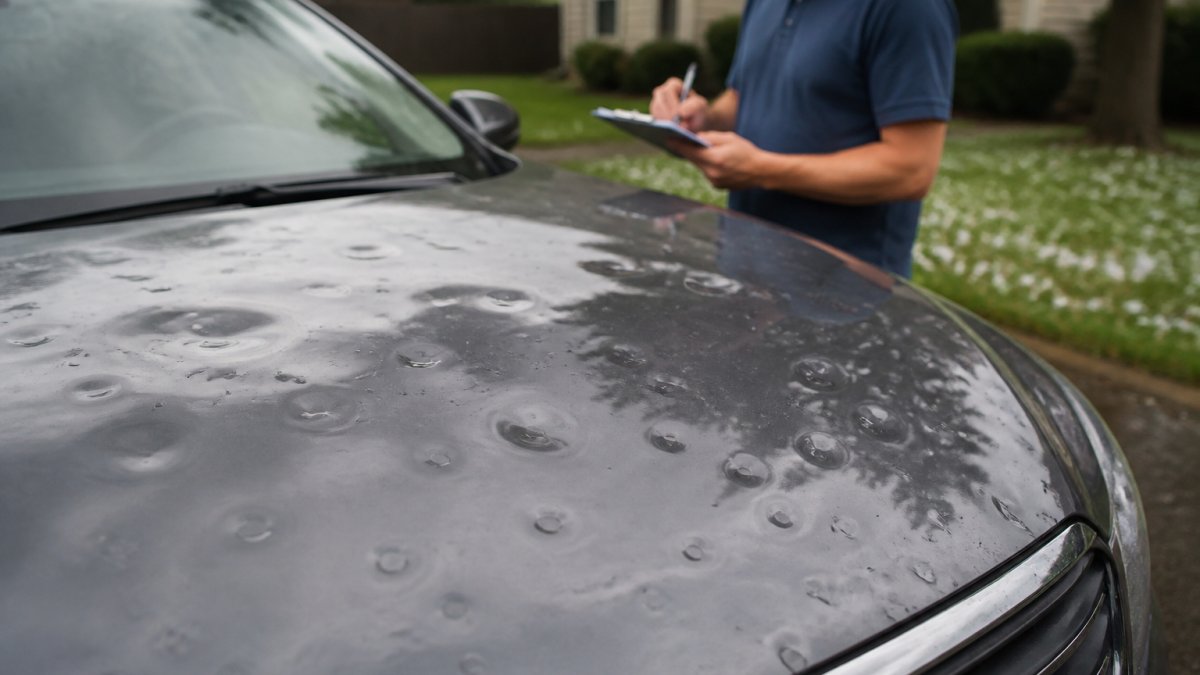
Hail creates dents across body panels, roof, hood, and sometimes the windshield. Buyers worry about hidden mechanical damage and whether repairs were done properly, concerns that translate directly into lower offers.
The real question isn’t whether hail damage car value declines, it does. It’s how much, and whether repairing it before you sell makes financial sense.
Cosmetic Versus Structural Damage: What Actually Impacts Value
Not all hail damage affects value equally. Understanding the difference between cosmetic and structural damage is critical to the right repair decision.
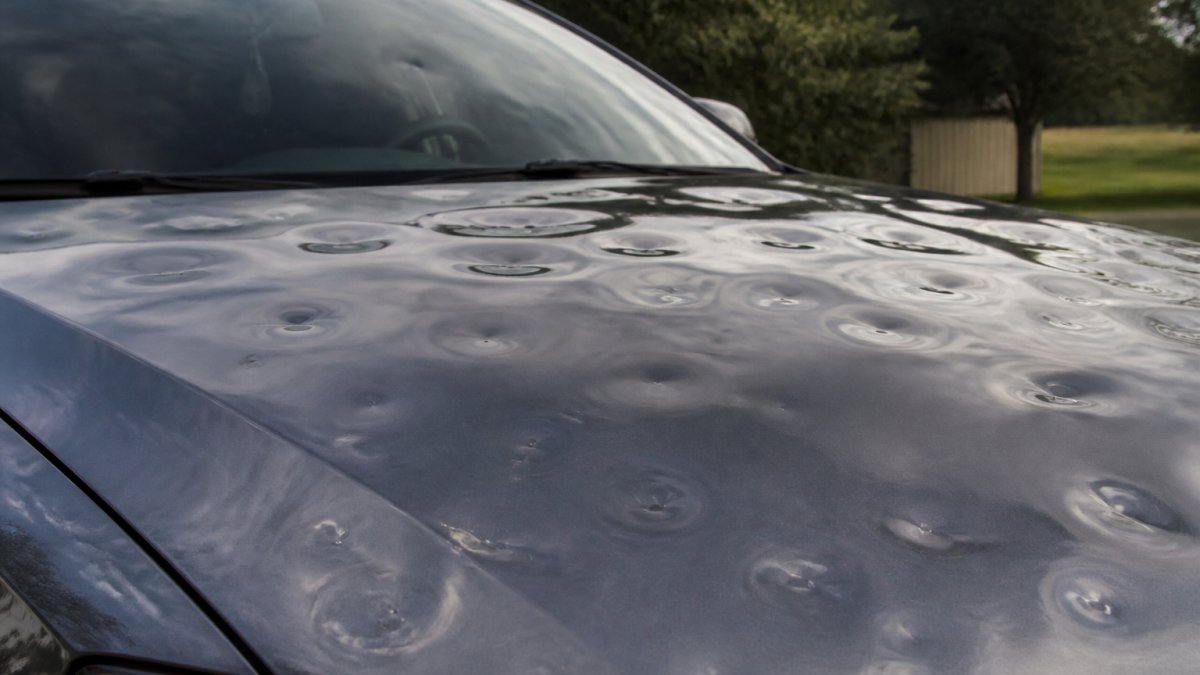
Cosmetic damage is what most hail storms create: visible dents in body panels, roof dimpling, and paint scuffs.
Structural damage includes bent frame components, crumpled door frames, or damage compromising the vehicle’s rigidity.
Most hail damage is cosmetic, visible dents that don’t affect mechanical function.
Visibility matters more than you might think.
For a more detailed look at repair options that preserve your vehicle’s condition, compare paintless dent repair versus body shop approaches to understand which method best maintains your car’s value.
Understanding Hail Damage and Trade-In Value at Dealerships
Dealerships are conservative with hail-damaged vehicles, seeing them as inventory requiring work before resale.
The trade-in process works like this:
- The appraiser inspects the vehicle
- They document all visible damage
- They estimate repair costs
A vehicle with minor cosmetic hail damage might see a trade-in value reduction of several hundred dollars. Extensive damage across multiple panels could reduce the offer by thousands.
The key insight: dealerships already factor in repair costs when they make an offer. You don’t get rewarded for fixing the damage yourself before trading in.
Hail Damage Repair Cost and Whether It Recovers Your Investment
Many car owners make a costly mistake here: assuming repairs restore the car’s full value. They won’t.
Repair costs vary by severity and method.
Here’s the financial reality:
- Minor hail damage repair: $500-$2,000
- Moderate damage: $2,000-$5,000
- Extensive damage: $5,000+
Even after repair, resale value may not fully recover. Buyers see the repair history, and some specifically avoid hail-damaged vehicles regardless of repair quality.
That means repair costs can exceed value recovery: spend $3,000 fixing the damage but recover only $1,500 in resale value, and the math doesn’t work.
Run the Repair-Versus-Sell Calculation
A practical framework beats broad cost ranges. Gather four numbers and compare them side by side:
- Estimated repair cost, Get a written estimate from a PDR specialist and, if panels need replacement, a body shop. Ask for the estimate in writing so you can compare it to the other numbers.
- Your insurance deductible, This is your out-of-pocket cost if you file a comprehensive claim. If the repair estimate is close to or below your deductible, filing a claim rarely makes sense.
- Likely value recovery, Estimate the difference between what a repaired vehicle and a damaged vehicle would sell for in your market. Use listings for similar year, make, model, and mileage, then adjust for condition. A common pattern is that repaired vehicles recover only part of the repair cost, not all of it.
- As-is offer, Get at least one written as-is offer from a dealer or online buyer. This is your floor.
Then compare: if (repair cost minus deductible) is greater than (value recovery minus as-is offer), repairing usually loses money. If the reverse is true, repair may be worth it, especially if you plan to keep the car.
Ask the repair shop whether the estimate assumes PDR only or includes panel replacement and paint. A PDR-only estimate can look attractive until hidden damage is found and the price jumps.
Deductible and Claim Timing Matter
Your deductible changes the math. With a $500 deductible and an $1,800 estimate, your out-of-pocket exposure is $500, possibly far less than the value recovery.
Claim timing matters too. Most insurers expect prompt reporting; waiting can complicate the claim if the insurer questions whether the damage came from the reported event. Document the storm’s date and location and keep weather reports as evidence.
When Repair Does Not Recover Your Investment
Repair rarely recovers its full cost when:
- The damage is extensive across multiple panels and requires paint and body work
- The vehicle is older or has high mileage, so the value ceiling is already low
- The repair estimate approaches or exceeds the as-is offer difference
In those cases, selling as-is and pricing the vehicle to reflect the damage is often the better financial move. The next section walks through how to decide.
Book a free hail damage inspection to get a written estimate you can plug into this calculation.
Repair costs vary significantly based on the severity of hail damage and the repair method used.
| Damage Severity | Typical Repair Cost | Recovery Notes |
|---|---|---|
| Minor hail damage | $500-$2,000 | Cosmetic dents, may use paintless dent repair |
| Moderate damage | $2,000-$5,000 | Multiple panels, may require paint and body work |
| Extensive damage | $5,000+ | Widespread panels, structural concerns possible |
| Repair rarely recovers full cost | Variable | Extensive damage, older vehicles, high mileage |
| Paintless dent repair (PDR) | Lower than body shop | No repainting or panel replacement required |
Should You Repair Hail Damage Before Selling Your Car?
Whether to repair hail damage before selling depends on the extent of damage, your timeline, and the market, but the strongest version of this decision uses your own numbers, not general rules of thumb.
Repair if:
- The damage is minor and cosmetic only
- You’re selling to a private buyer who values appearance
- The repair cost (after deductible) is less than the value recovery you’ll see
Don’t repair if:
- The damage is extensive and costly
- You’re trading in at a dealership (they’ll handle repairs)
- You need to sell quickly
One practical approach: get a professional damage assessment and repair estimate, research what similar vehicles in your area sell for, and compare repair cost to the likely value difference between damaged and repaired.
A Decision Framework You Can Actually Use
Instead of generic repair/don’t-repair lists, write down four numbers and compare them:
- Repair estimate (written, from a PDR or body shop)
- Your comprehensive deductible
- Likely repaired sale price (based on listings for similar vehicles in good condition)
If (repair estimate minus deductible) is greater than (repaired sale price minus as-is sale price), repairing usually costs more than it returns. If the reverse is true, repair may pay off, particularly if you plan to keep the car or sell to a private buyer who values appearance.
Repairing before selling only makes sense when the value recovery exceeds your out-of-pocket repair cost after the deductible. Run the numbers before you commit.
If You Decide Not to Repair: Disclosure and Negotiation
Selling a hail-damaged car as-is is legitimate, but disclosure and negotiation determine whether you get a fair price.
Prepare for inspection. Clean the vehicle, gather repair estimates or insurance documents, and be ready to show buyers exactly where the damage is.
Negotiate from your as-is floor. Use the written as-is offer you obtained as your floor.
Price to the damage, not to the repaired market. Listing at repaired-vehicle prices invites lowball offers once buyers see the dents.
Trade-In Versus Private Sale
Dealerships factor repair costs and resale risk into offers, so trade-in offers on hail-damaged vehicles are typically conservative. A private buyer who values appearance may pay more, but the sale takes longer and requires disclosure and negotiation. Need speed? Trade-in is simpler. Want the best price and can wait?
Book a free hail damage inspection to get a written estimate and as-is offer before you decide.
Documenting Damage, Filing Insurance Claims, and Protecting Your Value
If hail damage occurred during a storm, your comprehensive policy likely covers it.
Here’s how the process works:
Step 1: Document the damage thoroughly
- Take photos and video from multiple angles
- Capture close-ups of dents and visible damage
- Note the date and location of the storm
Step 2: Contact your insurance company
- Report the damage promptly
- Provide your documentation
- Get a claim number
Step 3: Get repair estimates
- Obtain quotes from qualified repair shops
- Insurance companies often have preferred vendors
- Provide estimates to your insurer
Step 4: Understand your deductible
- Your deductible is what you pay out-of-pocket
- Insurance covers the rest up to your policy limits
- Some policies waive the deductible for comprehensive claims
The critical point: filing an insurance claim protects your vehicle’s value recovery. It ensures the repair is done properly by a qualified shop.
One concern many owners have: will filing a claim increase my premiums? In most cases, comprehensive claims (including hail damage) don’t affect your rates.
Getting Your Vehicle Restored and Back on the Road
Once you’ve decided to repair the damage, choosing the right repair method matters.
The repair process typically takes 2-7 days depending on damage extent. During this time, you need transportation. Many repair shops provide loaner vehicles so you’re not without a car.
Hail Dawgz specializes in restoring hail-damaged vehicles using advanced techniques that preserve your factory finish. We provide hail damage repair services that restore your vehicle to pre-damage condition.
The benefits of professional repair:
- Preserves factory paint and finish
- Faster turnaround than traditional body shops
- Insurance coordination handled for you
After repair, your vehicle should look and function exactly as it did before the hail damage.
Frequently Asked Questions
Will hail damage lower my car’s resale value?
Yes, hail damage typically reduces resale value, though the amount depends on severity and repair status. Buyers view hail damage as a sign of past trauma, even if repairs are complete. Disclosure of hail damage history on the vehicle history report further impacts buyer confidence. Professional repairs, especially paintless dent repair that preserves your factory finish, help recover more value than selling as-is.
How much does hail damage repair cost compared to the value you’ll lose?
The relationship between repair cost and value recovery varies by vehicle age, make, and damage extent. On newer vehicles with minor damage, professional paintless dent repair often costs less than the value loss you’d accept by selling as-is, making repair the smarter choice. On older vehicles or those with extensive damage, repair costs may exceed the value recovery, making a private sale or trade-in as-is more practical. Insurance coverage with a reasonable deductible shifts the equation: if your insurer covers most of the repair cost, repairing almost always preserves more value than selling damaged. Request a repair estimate and compare it against the likely value reduction to decide.
Should I repair hail damage before selling my car?
Repair before selling if the damage is visible, affects multiple body panels, or damages the roof or windshield. Buyers immediately notice hail damage and factor significant discounts into their offers. Professional repairs, especially paintless dent repair, restore your vehicle to pre-damage condition and appeal, helping you command a higher sale price. However, if damage is minor and confined to one panel, or if repair costs exceed likely value recovery on an older vehicle, selling as-is and disclosing the damage may be more cost-effective. Always disclose hail damage history to prospective buyers; transparency builds trust and protects you legally.
Does repairing hail damage restore a car’s value completely?
Professional repairs restore your vehicle’s physical condition but may not fully restore market value if the damage history is recorded on the vehicle history report. Buyers and dealers know the car was damaged, and some will still apply a discount even after repairs. However, quality repairs, especially paintless dent repair that preserves your factory finish, minimize this residual discount. The better the repair quality and the fewer visible signs of damage remain, the closer you get to pre-damage value. Newer vehicles with minor damage recover value more completely than older vehicles or those with extensive structural or paint damage.
Hail damage affects your car’s resale and trade-in value, but the impact depends on damage severity, repair quality, and whether buyers perceive the vehicle as compromised. The smartest approach is to get a professional assessment, file an insurance claim if applicable, and make a repair decision based on the actual math, not assumptions. When repair makes sense, work with experienced technicians who understand how to restore your vehicle properly while preserving its value.

