
Last Updated: November 7, 2026
Quick Summary
To inspect a vehicle for hail damage, wash the car, park in open shade, and check each panel in a fixed order, starting with the roof, hood and trunk. Look for round, shallow dents, using a flashlight at an angle and reflections to reveal hidden damage. Photograph each damaged area before any repairs begin.
- Wash the car first, since dirt and grime hide small dents.
- Inspect on an overcast day or in open shade to avoid glare.
- Start with the roof, hood and trunk, which take the most direct hits.
- Hail dents are usually round, shallow and clustered on horizontal surfaces.
- Photograph and log all damage before contacting your insurer or starting repairs.
Table of Contents
- Prepare Your Vehicle and Inspection Area
- Step-by-Step Hail Damage Inspection Checklist
- How to Find Hidden Hail Damage on a Car
- Documenting Hail Damage for Your Insurance Claim
- Booking Your Free Hail Damage Inspection
- Frequently Asked Questions
Hail can leave a car looking fine from a few steps away and still cost thousands in repairs. Small dents and chipped glass often go unnoticed until a claim is filed. Knowing how to inspect a vehicle for hail damage gives you the facts before you call an insurer or a repair shop.
A panel-by-panel inspection takes time, so plan for a careful walk-around. Most of the work is patience and good light.
Prepare Your Vehicle and Inspection Area
Start by washing the car. Dirt, pollen and road grime hide small dents and make the paint look uneven.
Park in open shade or on an overcast day. Direct sun creates glare that washes out dents.
Gather a few simple tools:
- A flashlight or phone light
- A soft microfiber cloth
- A tape measure or coin for scale
Walk around the car once before you start. Note any obvious damage so you can compare it with what you find later.
Step-by-Step Hail Damage Inspection Checklist
Work in the same order every time so you do not skip an area. The sequence below moves from the highest-impact surfaces to the lowest. Check one section, then move to the next, and note each finding before you move on.
- Roof and sunroof
- Hood and front fenders
- Trunk lid and rear quarter panels
- Doors and rocker panels
- Glass, lights, mirrors, and trim
- Seals, drains, and interior
A consistent pattern makes it easier to spot where the damage is clustered and to compare your findings against an insurance estimate later.
Roof, Hood, and Trunk
These flat, horizontal surfaces take the most direct hits. Look at them first.
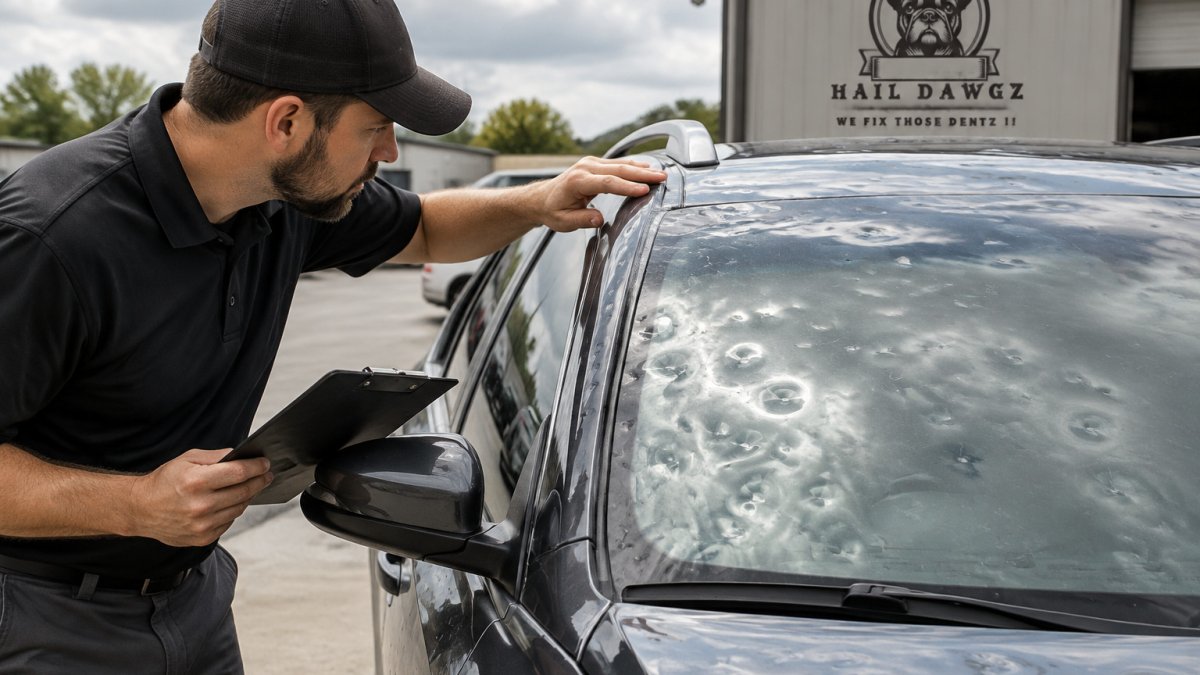
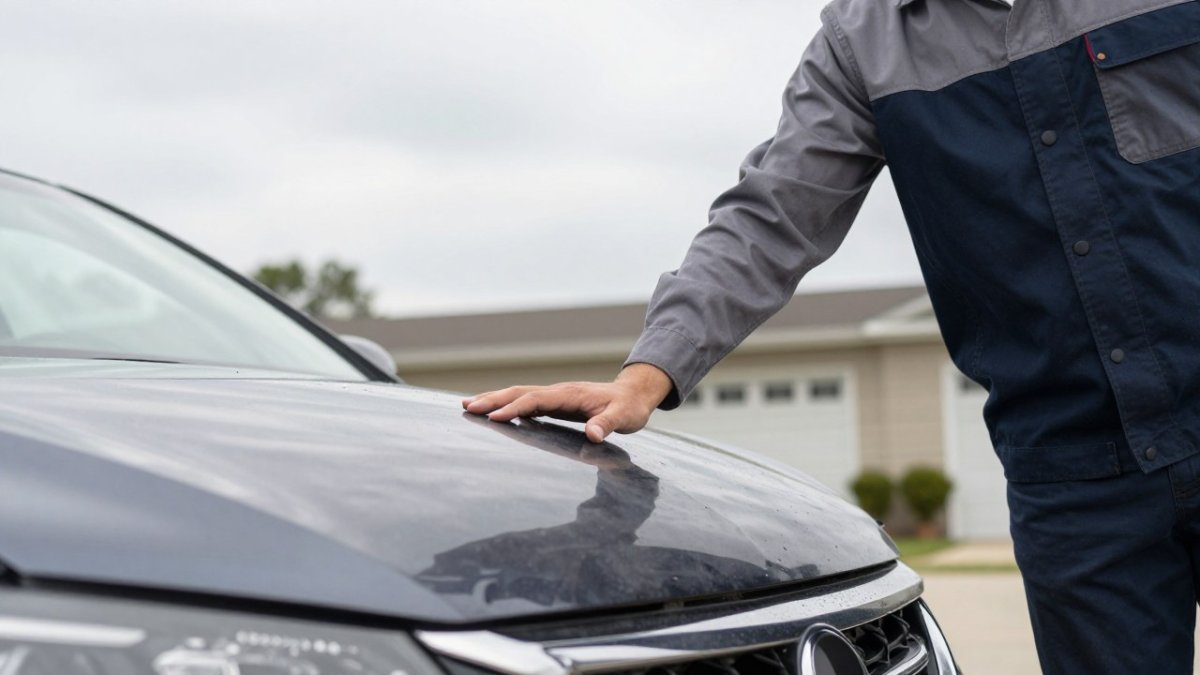
- Run your hand slowly across the surface, feeling for small bumps
- Tilt your head and view the panel at a low angle to catch reflections
- Look for dimples that appear as uniform, rounded spots
Hail dents are usually round and shallow, and they often repeat across a panel. A cluster of similar spots on the roof and hood is a strong sign of hail.
Doors, Fenders, and Body Panels
Move down the sides of the car. Doors, fenders, quarter panels and rocker panels all need a close look.
- Inspect each door from both the front and the back of the car
- Check the fender curves, where dents often hide in the shape of the metal
- Look at the rocker panels below the doors, which are easy to miss
Mark any dent you see with a small piece of painter’s tape. This helps you keep track during the photo step.
Glass, Lights, Mirrors, and Trim
Hail can crack or chip glass, which is a safety issue. Inspect these parts carefully.
- Check the windshield for small chips, star-shaped cracks or long cracks
- Look at side and rear windows for chips along the edges
- Inspect headlight and taillight lenses for cracks or dents
Glass damage matters for both safety and inspection results. Cracked glass can spread with temperature changes, so report it right away.
Seals, Drains, and Interior
Hail rarely breaks a seal on its own, but a cracked sunroof frame or a damaged door seal can let water in. After the exterior walk-around, open each door and the trunk and look for damp carpet, water stains on the headliner, or fogging inside the glass. Check the sunroof drains by pouring a small amount of water into the track and watching for it to exit behind the front wheels.
Distinguishing Hail Dents from Other Damage
Not every dent is hail. Before you attribute a dent to a storm, compare it against these common look-alikes:
- Door dings: usually a single sharp crease near a door edge or parking-lot height, often with paint transfer.
- Parking damage: larger, irregular, and concentrated at bumper height or on a corner.
- Manufacturing imperfections: shallow ripples along a panel edge or near a weld seam that repeat symmetrically on both sides of the car.
Hail dents tend to be round, shallow, and clustered on horizontal surfaces, and they usually appear in groups rather than alone. If a dent is isolated on a vertical panel at door height, it is more likely a door ding than hail.
Grading Severity and Safety Checks
Separate cosmetic dents from damage that affects safety or water intrusion. A simple three-tier grade helps you decide what to do next:
- Cosmetic: small, shallow dents on horizontal panels with intact paint. These are candidates for paintless dent repair.
- Moderate: dents with cracked or chipped paint, dents on body lines, or dents near glass and trim. These need a repair estimate before you decide.
- Safety-related: cracked or chipped glass, damaged light lenses, bent trim that interferes with a door or trunk seal, or any sign of water intrusion. Have these assessed promptly, because cracked glass can spread and a compromised seal can lead to mold and electrical problems.
Watch out: a dent that looks cosmetic can hide cracked paint underneath, and cracked paint left unrepaired can lead to corrosion. If you are unsure of the grade, photograph the area and have a technician confirm it before you file a claim.
The checklist below sums up the inspection order and what to look for on each area of the vehicle.
| Step | What to check | Why it matters |
|---|---|---|
| Roof and sunroof | Round, shallow dimples on flat surfaces | Takes the most direct hits |
| Hood and front fenders | Uniform clusters of similar spots | Strong sign of hail |
| Trunk lid and rear quarter panels | Edges where the lid meets the rear window | Often overlooked |
| Doors and rocker panels | Dents from front and back of car | Rocker panels are easy to miss |
| Glass, lights, mirrors, trim | Chips, cracks, dented housings | Cracked glass is a safety issue |
| Seals, drains, interior | Damp carpet, headliner stains, slow drains | Water can enter through damage |
How to Find Hidden Hail Damage on a Car
Some damage is hard to see in ordinary light. These methods help reveal it.
Check the edges and seams. Hail often hits the leading edges of panels and the areas near trim.
Feel the surface. Your fingers can detect small dents that your eyes miss.
A common mistake is inspecting only in direct sunlight at noon. Shadows and angles matter more than brightness.
Documenting Hail Damage for Your Insurance Claim
Good photos help you and your insurer agree on what happened. Take them before any repairs begin, and follow the same sequence every time so nothing is missed.
A Repeatable Photo Protocol
Photograph the car in this order, and take one wide shot and one close-up for each panel:
- Four corner shots showing the whole vehicle
- One wide shot of each side, the roof, the hood, and the trunk
- One close-up of each damaged panel, with a coin or tape measure for scale
- One low-angle shot of each damaged panel with the flashlight held to the side
- One close-up of any glass chip or crack, with a ruler if possible
Name the files by panel and date (for example, “roof-rear-2026-11-07”) so you can match them to your written log. Keep the original files; do not crop or edit them before you submit them.
Build a Damage Log
Keep a simple list next to your photos. For each entry, record the panel, the approximate number of dents, the size range, and whether the paint is cracked. Add the date, time, and location of the storm if you know them. A written log makes it easier to compare your findings with an insurance estimate and to show a repair shop exactly what you found.
Used-Car Purchase and Disclosure Checks
If you are inspecting a vehicle you are thinking about buying, documentation goes beyond photos. Ask the seller for repair records and any insurance claims tied to the vehicle, and check the title history for a salvage or rebuilt brand that could point to prior hail damage. Look for signs of prior hail repair: mismatched paint on one panel, fresh seam sealer around the trunk or roof, or a paintless dent repair invoice in the glovebox.
Insurance Coverage Basics
Your insurance policy may cover hail damage, but coverage depends on your specific policy. For a deeper walkthrough, read how to document hail damage for insurance claims.
Watch out: filing a claim before you have photos can make it harder to prove which dents came from the storm and which were pre-existing. Photograph and log the damage first, then contact your insurer.
Booking Your Free Hail Damage Inspection
If you find dents, a professional inspection can confirm the full scope of the damage and estimate repair options. Browse beautiful roofs professionally done to see the kind of work involved. Learn how to find certified paintless dent repair technicians before you book.
Paintless dent repair can often restore a vehicle to its pre-damage condition while preserving the factory finish. Compare paintless dent repair vs body shop to see which option fits your situation.
Ready to get a clear picture of your vehicle? Book now and we will schedule a free inspection at a time that works for you.
Frequently Asked Questions
Is hail damage always visible on a vehicle?
No. Shallow dents on steel panels are often visible, but hail can also cause micro-dents, small creases, and clear coat fractures that are hard to see in flat daylight. Inspect under bright, angled light and run your hand across panels, since you can often feel dents your eyes miss. Hidden damage can still be found, and a professional inspection can confirm it before you file a claim or sell the vehicle.
Where should you look for hail damage on a car?
Start with the surfaces hail hits most directly: the roof, hood, trunk lid, and upper edges of doors and fenders. Then check the windshield, rear glass, mirrors, headlights, taillights, and trim. Hail damage usually appears on the top-facing surfaces first, so a systematic check of those areas catches most of the damage before you move to lower panels.
Will hail damage show up on a CarFax?
Not automatically. Vehicle history reports such as CARFAX record insurance claims that were filed and reported, along with some accident and title events. If the damage was repaired without a claim, it may never appear. Keep your own repair records and documentation, because a buyer may ask for them even when the report is clean.
Should I get a professional inspection before filing a hail damage claim?
A professional inspection is worthwhile before you file. A trained technician can separate hail dents from other damage, estimate the repair scope, and tell you whether paintless dent repair is an option. Hail Dawgz offers free hail damage inspections, and you can book one through the website to get a clear picture of the damage before deciding how to proceed.

