
Table of Contents
- How to Avoid Out of Pocket Hail Costs: The Complete Process
- Understanding Your Hail Damage Insurance Deductible
- Step-by-Step Hail Damage Insurance Claim Process
- Getting a Hail Damage Repair Estimate
- Repair Options That Don’t Require Out of Pocket Payment
- Hail Damage Repair Cost Without Insurance Coverage
- Common Mistakes That Increase Your Out of Pocket Costs
- Frequently Asked Questions
Last Updated: October 17, 2026
How to Avoid Out of Pocket Hail Costs: The Complete Process
When hail strikes your vehicle, the financial stress can feel overwhelming. At Hail Dawgz, we’ve guided vehicle owners through this process, and the path to zero out-of-pocket costs is clearer than most people think.
Avoiding out of pocket hail costs starts with understanding your insurance coverage and knowing exactly what steps to take after damage occurs.
This guide walks you through the entire process. We’ll show you how your comprehensive insurance works, how to file a claim correctly, and how repair shops can help reduce or eliminate your deductible burden.
Understanding Your Hail Damage Insurance Deductible
Your insurance deductible is the amount you agree to pay out of pocket before your insurer covers the rest. For hail damage, this typically falls under comprehensive coverage, not collision coverage.
Comprehensive coverage protects against damage from weather events, theft, and other incidents outside your control. Hail falls squarely into this category. When a hailstorm damages your vehicle, your comprehensive policy kicks in to cover repair costs above your deductible.
What Comprehensive Coverage Includes
Comprehensive insurance covers hail damage repair costs in full, minus your deductible. This includes dent repair, glass replacement, and paint damage caused by hail.
The coverage applies whether you’re parked at home, at work, or anywhere else. Your location doesn’t matter, hail damage is covered under comprehensive as long as you have that coverage active.
One important note: comprehensive coverage does NOT cover damage you cause yourself or damage from collisions with other vehicles. It’s specifically for weather and environmental damage.
Deductible Ranges and What You Typically Owe
Deductibles vary widely depending on your policy. Common ranges fall between $250 and $1,000, though some policies have lower or higher deductibles.
Your specific deductible amount is listed in your insurance policy documents. Check your declarations page to find the exact figure. This is the number you need to know before filing a claim.
Here’s the key: once you file a claim and your insurer approves the repair estimate, you only pay your deductible. The insurer covers everything else, no matter how high the repair bill climbs.
Step-by-Step Hail Damage Insurance Claim Process
Filing a hail damage claim involves specific steps that must happen in the right order. Skip a step or delay too long, and you risk complications.
Document Your Damage Immediately
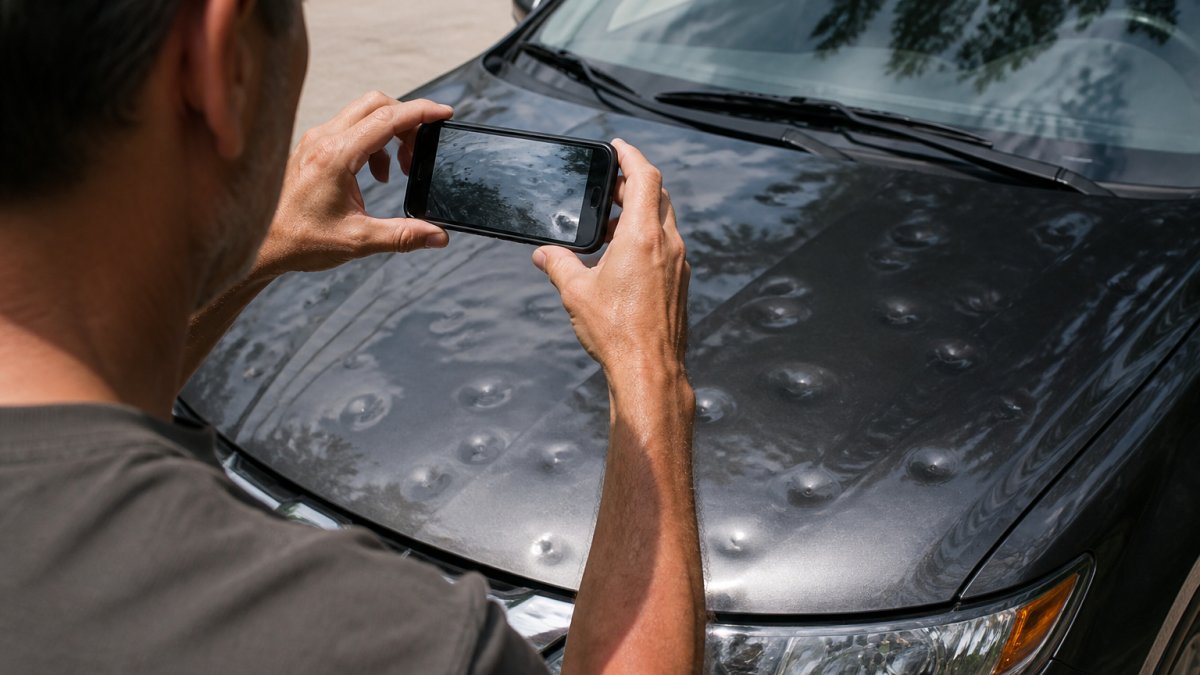
Start documenting damage the same day the hailstorm hits. Take clear photos and videos of every dent, crease, and damaged area on your vehicle.
Photograph the damage in daylight. Show the overall vehicle from different angles, then zoom in on specific dents. Include photos of the roof, hood, doors, and windows.
Write down the date and time of the hailstorm. Note the location where your vehicle was parked. This information supports your claim and helps your insurer process it faster.
Don’t wait days or weeks to document damage. The sooner you capture images, the stronger your claim becomes.
File Your Claim Within the Required Deadline
Contact your insurance company within a few days of the storm. Most insurers have no strict deadline for filing hail damage claims, but filing quickly prevents complications.
When you call, have your policy number ready. Describe the damage clearly and mention that it’s weather-related hail damage. Provide the date and location of the storm.
Your insurer will assign a claims adjuster to your case. This person inspects your vehicle and estimates repair costs.
Some insurers allow you to file claims online through their mobile app or website. Check your insurer’s website to see what options they offer.
Work With Your Insurer’s Adjuster
The adjuster will contact you to schedule a vehicle inspection. This appointment typically happens within a few days of filing.
During the inspection, the adjuster photographs your vehicle and takes detailed measurements of dents and damage. They use this information to create a repair estimate.
Be present during the inspection if possible. You can point out damage the adjuster might miss. Ask questions about their estimate and what it covers.
Once the adjuster completes their estimate, your insurer sends you a copy. This estimate becomes the baseline for repair costs.
Getting a Hail Damage Repair Estimate
You don’t have to use your insurer’s estimate. Getting a second estimate from a repair shop helps you understand the full scope of damage and available repair options.
Free Inspections and Estimates
Most reputable hail damage repair shops offer free inspections and estimates. This costs you nothing and gives you valuable information.
During a free inspection, the repair shop examines your vehicle thoroughly. They identify all damage, visible and hidden, that the hailstorm caused.
The shop provides a detailed written estimate showing labor costs, parts, and the repair method they recommend. This estimate becomes important when discussing options with your insurer.
At Hail Dawgz, we offer free inspections and detailed estimates for all hail damage.
How Paintless Dent Repair Affects Your Final Cost
Paintless dent repair (PDR) is a technique that removes dents without repainting the vehicle. This method preserves your factory finish and costs significantly less than traditional body work.
PDR works by accessing the back side of dents and carefully pushing them out from behind.
Because PDR avoids repainting, it’s faster and cheaper than traditional repair. A vehicle that might cost $3,000 to repair with traditional methods could cost $1,500 with PDR.
Your insurer’s estimate may not account for PDR. When you get a repair estimate from a PDR specialist, you often discover that repair costs are lower than the insurer’s estimate.
Repair Options That Don’t Require Out of Pocket Payment
Several legitimate strategies help you avoid paying your deductible. These approaches work within insurance regulations and industry standards.
Direct Repair Programs With Your Insurer
Many insurance companies operate direct repair programs (DRPs) with approved repair shops. When you use a DRP shop, your insurer may waive or reduce your deductible.
DRP shops have agreements with insurers to handle claims efficiently. In exchange, insurers send them business and sometimes reduce customer deductibles.
Ask your insurer whether they have a DRP program and which shops participate. Using a DRP shop can eliminate your out-of-pocket costs entirely.
Deductible Assistance From Repair Shops
Some repair shops offer deductible assistance programs. These shops pay your deductible as part of their service, essentially covering it for you.
How this works: The repair shop pays your deductible directly to your insurer. You pay the shop nothing out of pocket.
This is legal and common in the hail repair industry. The shop absorbs the deductible cost as a business practice to attract customers.
At Hail Dawgz, we work directly with all major insurance companies to simplify this process. Our goal is zero out-of-pocket costs for our customers. We work directly with your insurer to approve repairs quickly.
Legal and Regulatory Limits on Deductible Assistance
Before accepting deductible assistance, ask the shop to explain how the program works. Make sure you understand whether any conditions apply.
Hail Damage Repair Cost Without Insurance Coverage
Sometimes filing an insurance claim isn’t the right choice. Understanding when to skip the claim process saves you money and hassle.
When Filing a Claim May Not Be Worth It
If your repair estimate is close to your deductible, filing a claim may not be worth it. For example, if your deductible is $1,000 and repairs cost $1,200, filing a claim only saves you $200.
Consider the impact on your claim history. Filing a claim, even if approved, becomes part of your insurance record. Future claims or policy reviews may reference it.
If you have minor damage and can afford to pay for repairs yourself, skipping the claim process protects your claim history and may help keep premiums stable.
Impact on Your Insurance Premium and Claim History
Filing a hail damage claim typically doesn’t increase your premiums. Hail is an act of nature, not driver error, so insurers view hail claims differently than collision or at-fault accident claims.
However, multiple claims in a short period can affect your rates. If your area experiences frequent hailstorms and you file claims regularly, your insurer may adjust your premiums.
Your claim history stays on your record for years. When you shop for new insurance or renew your policy, insurers see your claim history.
If you’re considering skipping a claim to protect your history, get a repair estimate first.
Common Mistakes That Increase Your Out of Pocket Costs
Most people make at least one mistake when handling hail damage. These errors cost money and create unnecessary stress.
Delaying Repairs and Procrastinating on Claims
Waiting weeks or months to file a claim complicates everything. Your memory of the hailstorm fades. Documentation becomes harder. Your insurer may question whether the damage is recent.
Delaying repairs causes additional problems. Hail dents expose metal under the paint. Water seeps into the exposed areas, causing rust and corrosion. What started as a cosmetic dent becomes structural damage requiring more expensive repairs.
Every day you delay, your vehicle’s value decreases. Buyers see hail damage and offer less money. Resale value drops significantly when damage goes unrepaired.
File your claim within days of the hailstorm. Schedule repairs immediately after your insurer approves the estimate. Don’t procrastinate.
Choosing the Wrong Repair Shop
Not all repair shops handle hail damage equally. Some shops lack experience with PDR. Others charge inflated prices or do poor-quality work.
A bad repair shop leaves dents visible, mismatches paint, or damages your vehicle further. You end up paying again to fix their mistakes.
Check reviews before choosing a shop. Ask whether they’re certified in PDR techniques. Verify they work directly with insurers to simplify claims.
At Hail Dawgz, we bring over 20 years of experience in hail damage repair. Our certified technicians use advanced PDR techniques to restore your vehicle to pre-damage condition.
Not Negotiating or Questioning Your Estimate
Accept your insurer’s estimate as written, and you may pay more than necessary.
Sometimes insurers’ estimates include unnecessary work or inflated labor costs. A skilled repair shop can often accomplish the same result more efficiently.
Get multiple estimates before approving repairs. Compare the estimates side by side. If one shop’s estimate is significantly lower, ask why.
Question anything in the estimate you don’t understand. Ask the shop to explain every line item.
Avoiding out of pocket hail costs comes down to acting fast, understanding your coverage, and working with a repair shop that prioritizes your financial interests.
Frequently Asked Questions
Can a repair shop waive my hail damage deductible?
Some repair shops offer deductible assistance or coverage as part of their service. They may offer discounts, promotional credits, or bundle services to reduce your net out-of-pocket cost. Always ask your repair shop what assistance they provide before authorizing work.
How can I reduce my out-of-pocket costs for hail damage repair?
File your insurance claim promptly with comprehensive documentation of the damage. Get a free repair estimate from a certified shop to verify the insurer’s assessment. Consider joining your insurer’s direct repair program, which often waives or reduces deductibles. Ask your repair shop about promotional offers or deductible assistance programs. If the damage is minor, compare the cost of filing a claim against your deductible versus paying out of pocket and avoiding a premium increase.
Is it worth filing an insurance claim for hail damage?
File a claim if the repair cost significantly exceeds your deductible. For example, if your deductible is $1,000 but repairs cost $5,000, filing saves you money. However, if repairs cost less than your deductible, paying out of pocket avoids a claim on your history, which protects your premium from potential increases. Review your policy’s claim history impact and ask your insurer about the premium effect before deciding.
Does hail damage cause insurance to go up?
Hail damage is typically considered a comprehensive claim, not at-fault damage, so it may have less impact on your premium than collision claims. However, multiple claims within a short period can increase your rates. Some insurers forgive one comprehensive claim or offer accident forgiveness if you have good standing. Contact your insurer to understand how a hail claim specifically affects your policy and rates before filing.
