Quick Summary
The article cannot give a sourced ranking of Total Hail Solutions vs HTS Hail, because verified company-specific comparison data was not available. Instead, it recommends asking both providers the same six questions about repair methods, service area, estimates, insurance billing and warranty, then comparing their written answers.
- Ask each provider whether it uses paintless dent repair or body work, and when it switches methods.
- Confirm the legal business name on the estimate matches the state registry and your insurer’s records.
- Request a written estimate listing labor, materials, fees and possible changes.
- Ask who collects the deductible and who files any supplement for hidden damage.
- Get the workmanship warranty terms in writing before you approve repairs.
Table of Contents
- How Total Hail Solutions and HTS Hail Compare on Services
- What to Check When Vetting Hail Damage Repair Companies
- How Insurance Claims Work With a Hail Repair Provider
- Getting a Hail Damage Repair Estimate and Turnaround Expectations
- Booking Your Free Hail Inspection With Hail Dawgz
- Frequently Asked Questions
How Total Hail Solutions and HTS Hail Compare on Services
This Total Hail Solutions vs HTS Hail comparison cannot give you a sourced ranking of the two providers, because verified company-specific comparison data was not available for it. What we can do is set out the criteria that matter, show you how to check each provider yourself, and flag the places where the two names most often get confused.
Service Scope and Repair Methods
The first question is whether a provider uses paintless dent repair (PDR), traditional body work, or both. PDR removes hail dents by massaging the metal back into shape without sanding or repainting, which preserves the factory finish. Traditional body work involves filler, paint, and refinishing, and it is often needed when the paint is cracked or the dent sits on a body line.
Ask each company directly which method it expects to use on your vehicle, and whether it will switch to body work if PDR cannot finish the job. Get that answer in writing.
Service Areas and Verified Company Details
Service areas matter more than most buyers expect. When you weigh Total Hail Solutions vs HTS Hail, fleet work across several vehicles needs a shop that can handle volume. Confirm the physical address, the service area, and whether repairs are done on-site or at a shop before you commit.
Verify company details through the state business registry and current customer reviews rather than relying on a listing alone. Two names that sound alike can be separate businesses with separate footprints, so confirm the legal entity name on the estimate matches the name on the truck and the name on your insurer’s paperwork.
A name that sounds similar is not proof of the same company. Before you sign anything, match the legal business name on the written estimate to the name on the state business registry filing and to the name your insurer will pay. If any of the three do not match, ask why in writing.
A Side-by-Side Framework You Can Fill In
Because published, verifiable details for both providers are thin, the honest comparison is the one you build from written answers. Use the same six questions for each company and keep the replies next to each other:
- Which repair methods do you use, and what triggers a switch from PDR to body work?
- What is your physical address, and which ZIP codes do you serve?
- Do you repair on-site, at a shop, or both?
- What does your written estimate include, and what can change it?
- Do you bill the insurer directly, or do I pay and seek reimbursement?
- What workmanship warranty do you provide, and for how long?
A provider that answers all six plainly is easier to compare than one that answers in generalities. That framework is the closest thing to a fair head-to-head when neither company publishes a full service menu.
The six questions below give you a side-by-side way to compare any two providers on the criteria the article covers.
| Question to ask each provider | Why it matters | Where to check |
|---|---|---|
| Which repair methods do you use? | PDR preserves factory finish; body work may be needed | Written reply from each company |
| What is your physical address and ZIP coverage? | Confirms service area and fleet capacity | Company listing and state registry |
| Do you repair on-site, at a shop, or both? | Shows where the work is done | Written reply from each company |
| What does your written estimate include? | Reveals labor, materials, and possible changes | Sample estimate |
| Do you bill the insurer directly? | Determines how much paperwork falls on you | Written reply from each company |
| What workmanship warranty do you provide? | Shows duration of coverage after repair | Written warranty terms |
What to Check When Vetting Hail Damage Repair Companies
Use a short checklist before you hand over your keys:
- Ask whether the work uses PDR or body work, and what happens if PDR is not enough.
- Confirm the service area covers your ZIP code, including 78109 if that is where you live.
- Ask for a written estimate that lists labor, materials, and any fees.
- Check whether the shop works directly with your insurer or only through a claims adjuster.
- Ask about the rental car policy and how long it lasts.
- Read recent reviews that mention the specific kind of job you need, such as a fleet or a single vehicle.
A reliable provider answers these questions plainly and without pressure. Vague answers are a warning sign.
How Insurance Claims Work With a Hail Repair Provider
Hail damage is usually covered under the comprehensive portion of an auto policy, and it is subject to your deductible (Auto insurance guide). Whether you pay the deductible before repairs begin depends on your policy and your insurer.
The part most comparisons skip is the sequence. A typical claim runs through five steps:
- Inspection and estimate. The shop documents the dents and writes an estimate, often using insurer-recognized estimating software so the numbers line up with what the adjuster expects.
- Adjuster review. Your insurer reviews the estimate and may approve it, revise it, or send its own adjuster. Some shops photograph and upload the damage so the adjuster can review remotely.
- Approval and deductible. Once approved, you owe the deductible and the insurer pays the approved amount, minus any policy limits. Confirm whether the shop collects the deductible up front or at pickup.
- Supplement. If hidden damage appears once panels are opened, the shop files a supplement. A supplement is a revised estimate, not a new claim, and it must be approved before the extra work is billed.
- Payment and warranty. The insurer pays the shop or reimburses you, depending on the policy and the shop’s billing setup. The workmanship warranty is separate from the insurance payout.
Ask each provider which of these steps it handles for you and which fall on you. To see how to keep unexpected expenses down, read our guide on avoiding out-of-pocket hail costs.
Hail Dawgz works directly with insurance companies to simplify the claim. Check your own policy for the deductible amount and any rental coverage. For the official rules on auto insurance in Texas, see the Texas Department of Insurance at Texas Department of Insurance consumer auto insurance guidance.
Ask for the claim sequence in writing: who submits the estimate, who talks to the adjuster, who files supplements, and who collects the deductible. The answers tell you how much of the paperwork you will be doing yourself.
For a step-by-step look at filing a claim, read our complete hail damage insurance claims guide and our guide on avoiding out-of-pocket hail costs.
Getting a Hail Damage Repair Estimate and Turnaround Expectations
A written estimate should list each repair, the method, and the expected completion time. Turnaround depends on the number of dents, their location, and whether parts or paint are needed. Turnaround times vary by job, so request a specific timeline from each provider.
Ask each provider for a timeline in writing and a point of contact who can answer questions during the repair. For common questions about estimates and timing, see our FAQ page.
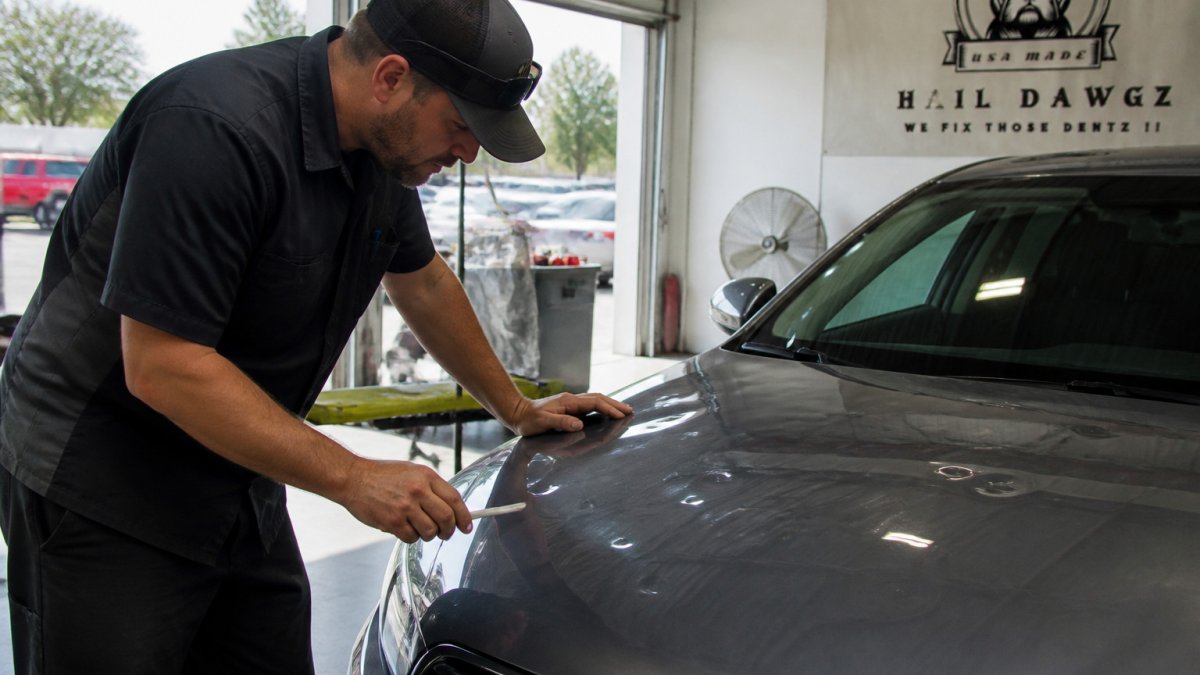
!A technician in a work uniform examining a dented car hood under bright daylight in a repair shop bay
Booking Your Free Hail Inspection With Hail Dawgz
If you want to see what your vehicle needs, Hail Dawgz offers free hail damage inspections. You can review our hail damage repair service to see the work we do, then book a free inspection.
Frequently Asked Questions
What is the difference between Total Hail Solutions and HTS Hail?
The supplied research does not include verified, company-specific details for either Total Hail Solutions or HTS Hail, so a direct difference cannot be confirmed here. Compare each provider’s stated services, repair methods, service area, and insurance handling by checking their websites or calling them directly. Ask for written answers on paintless dent repair, mobile service, and whether they work with your insurer.
What services do Total Hail Solutions and HTS Hail offer?
Verified service listings for Total Hail Solutions and HTS Hail were not part of the research available for this article. Confirm the services each company lists on its own website, including whether it offers paintless dent repair, on-site work, and claims assistance. Request a written description of the scope before you book so you know exactly what will be repaired.
Does paintless dent repair work for all hail damage?
Paintless dent repair works well on many hail dents where the paint is intact and the metal has not been creased or cracked. Damage with broken paint, sharp creases, or heavy body panel deformation may need traditional body work. A reputable shop will inspect the vehicle and explain which method fits each dent before starting. Hail Dawgz offers free hail damage inspections to make that assessment.
Will insurance cover hail damage repair?
Hail damage is commonly handled under comprehensive coverage on an auto policy, which typically carries a deductible. Coverage depends on your specific policy, so check your declarations page or call your insurer. Hail Dawgz works directly with major insurance companies, and its listed benefits include zero out-of-pocket repair costs for eligible claims.

