Table of Contents
- Hail Raisers vs Legacy PDR: What Sets Them Apart
- Understanding Paintless Dent Repair and Hail Damage
- Questions to Ask a PDR Company Before You Commit
- Getting a Hail Damage Repair Estimate: What to Expect
- How the PDR Insurance Claim Process Works
- Hail Repair Turnaround Time: Getting Your Vehicle Back
- Making Your Decision: Which Service Is Right for You
- Frequently Asked Questions
Last Updated: October 12, 2026
Hail Raisers vs Legacy PDR: What Sets Them Apart
When hail strikes your vehicle, two repair approaches dominate: paintless dent repair (PDR) and traditional body shop work. Understanding how Hail Raisers vs Legacy PDR compare helps you choose wisely.
The honest starting point: these are not two competing repair methods but two ways of shopping for the same service.
Both models can produce excellent or poor PDR work. The difference is what happens after the invoice is signed.
| Factor | Storm-Chasing / Pop-Up Operation | Established Local PDR Shop |
|---|---|---|
| Physical address | Often temporary (hotel lot, rented bay, mobile unit) | Fixed, verifiable commercial location |
| Warranty enforceability | Difficult if the crew has left the market | Enforceable against a business still operating locally |
| Insurance relationships | May be new to local adjusters | Established working relationships with area adjusters |
| Scheduling during peak season | Can absorb surge volume quickly | Capacity limited by local technician count |
| Post-repair follow-up | Often unavailable after the storm cycle ends | Available for inspection, touch-up, or warranty claims |
| Local reputation | Little or no verifiable history | Reviews, references, and repeat customers |
Neither column is automatically better. A large storm-chasing operation may clear a backlog faster; a local shop may take longer but will still be there if a dent lifts.
Three factors should drive your decision:
- What gets damaged. Most hail damage involves dozens of small dings across multiple panels. PDR excels here regardless of which provider you choose. When panels are creased, cracked, or have paint damage, traditional body work becomes necessary, and not every PDR-only operation can handle that handoff.
- How much time you have. Pure PDR on a handful of panels typically takes 2-5 days. Traditional body work involving panel replacement, primer, paint, and curing can extend to 1-3 weeks.
- Whether your insurance covers the full repair cost. Comprehensive coverage with a deductible is the norm for hail claims. Your out-of-pocket exposure is usually the deductible, not the difference between providers, which means provider selection should be driven by quality and warranty, not by which estimate is a few hundred dollars lower.
| Repair Method | Best For | Typical Timeline | Paint Preservation |
|---|---|---|---|
| Paintless Dent Repair | Small to medium dings, multiple panels | 2-5 days | Maintains factory finish |
| Traditional Body Work | Severe creases, paint damage, panel replacement | 1-3 weeks | Requires repainting |
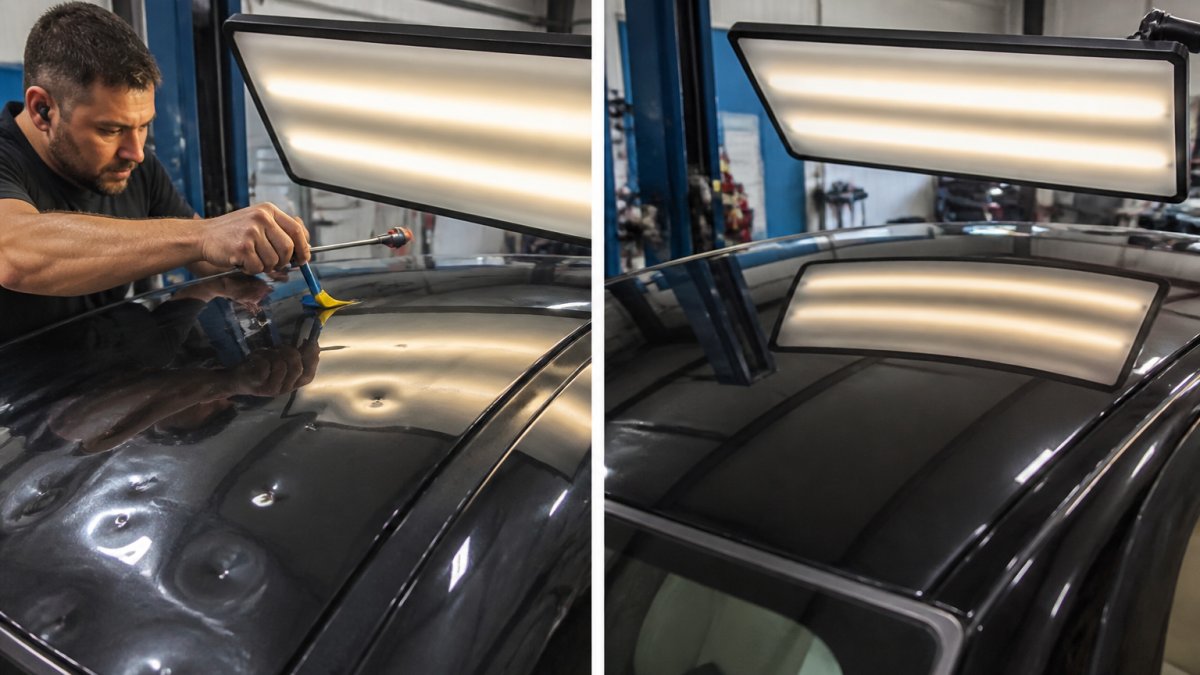
PDR preserves your factory finish by manipulating dents from behind the panel without sanding, filling, or repainting, unlike traditional repair, which often requires panel replacement, primer, paint, and weeks of downtime.
Understanding Paintless Dent Repair and Hail Damage
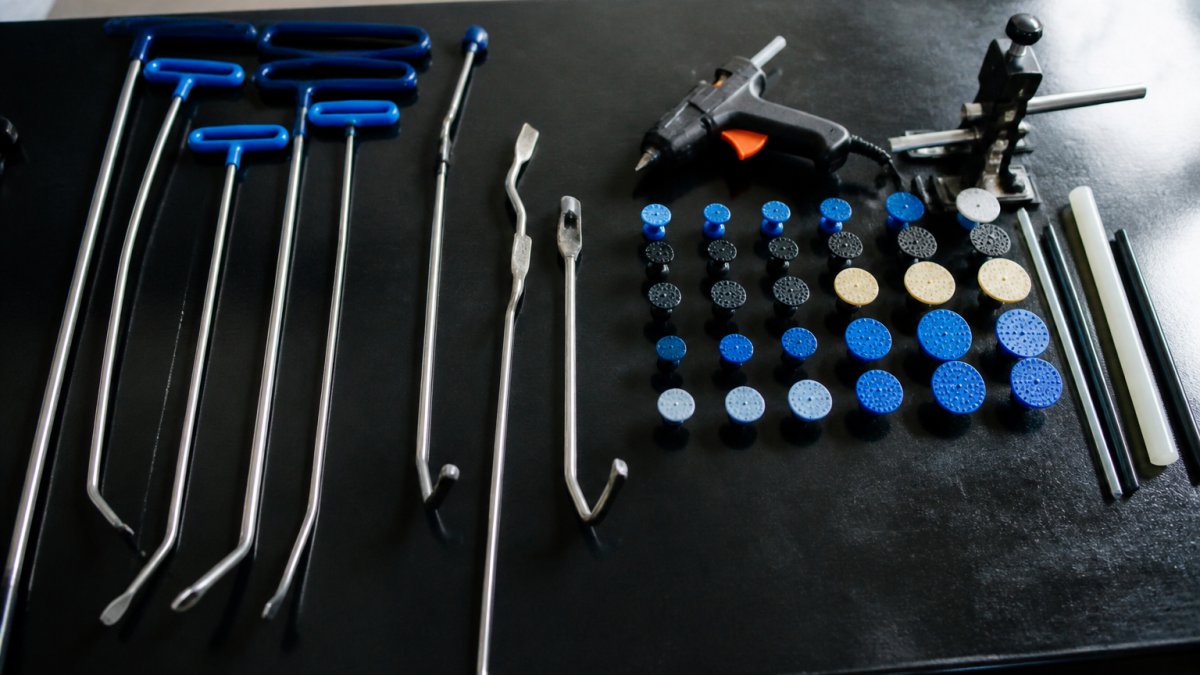
Paintless dent repair removes dents by manipulating metal panels from behind without disturbing the original paint. Technicians use precision tools to access the backside of damaged panels, applying controlled pressure to restore their original shape.
Assessment begins with a thorough inspection: a certified technician evaluates each dent’s depth, location, and whether the paint is compromised. If hail has cracked the clear coat or exposed bare metal, PDR alone cannot fix it, traditional repainting becomes necessary.
Most hail storms create mixed damage: a vehicle might have 50 small PDR-suitable dings alongside 3-4 panels with paint damage requiring traditional repair. Experience separates competent shops from mediocre ones, and the best approach often combines both methods.
Many owners worry PDR might leave visible dents or damage paint. Performed by certified technicians, PDR actually preserves value better than traditional repair: the factory finish stays intact, with no risk of color mismatch or adhesion problems that plague repaints.
Questions to Ask a PDR Company Before You Commit
Before selecting a hail repair service, ask these specific questions to evaluate their expertise and approach.
What’s your damage assessment process? A reputable shop inspects in detail, identifies which dents are PDR-suitable versus traditional, and provides a written estimate by panel and damage type.
Can you handle mixed damage? Some shops do only pure PDR, others only traditional body work.
How do you handle insurance claims? Ask whether they work directly with adjusters, submit estimates on your behalf, and manage the claims process, shops that do reduce your stress significantly.
What’s your warranty? Quality PDR shops stand behind their work with a written guarantee. Ask what they cover and for how long.
Do you provide a rental vehicle? Extended timelines mean you need transportation. Confirm upfront whether a loaner or rental car is included at no charge to avoid surprise costs.
Request references from recent customers who had similar damage. A shop confident in their work will readily provide names. Call or email those customers and ask specifically whether the repair held up and whether they were satisfied with the process.
Getting a Hail Damage Repair Estimate: What to Expect
A professional hail damage estimate should be comprehensive and transparent. Contact a repair service and they’ll schedule a free inspection assessing all visible damage.
During inspection, the technician photographs each damaged area, documents the damage type (PDR-suitable versus paint damage), and provides a written estimate itemizing labor, materials, and extras like windshield repair or rental car provision.
Many shops offer free estimates because transparent pricing builds trust. Never feel pressured to accept on the spot, understand what each promises.
Will the estimate match what insurance approves? Sometimes yes, sometimes no, adjusters occasionally miss damage or underestimate costs. A reputable shop advocates for you if the insurance estimate seems low, submitting supplemental documentation or photos to support a higher claim.
Avoid shops that pressure you to accept their estimate immediately or that guarantee they’ll beat any competitor’s price. Suspiciously low estimates often reflect cutting corners, using cheaper materials, rushing the repair, or skipping steps that preserve your vehicle’s quality.
How the PDR Insurance Claim Process Works
Understanding the insurance side removes much of the stress. Here’s how the process typically unfolds.
First, file a claim within your policy’s timeframe, providing photos of the damage and when the hail event occurred. Your insurer assigns an adjuster who schedules an inspection.
The adjuster documents damage and prepares an estimate, which becomes the basis for what insurance pays. If you carry comprehensive coverage with a $1,000 deductible and the repair costs $8,000, insurance pays $7,000 and you pay $1,000.
Here’s where a shop like Hail Dawgz makes a difference: we work directly with all major insurance companies, submitting estimates and handling claim paperwork, and we communicate with adjusters about damage missed in the initial inspection to advocate for fair claim amounts.
Many customers worry about being caught between the insurance estimate and actual repair cost.
The most stress-free claims process happens when your repair shop manages the insurance relationship. They know what adjusters expect, which photos and documentation carry weight, and how to present supplemental damage claims professionally.
Hail Repair Turnaround Time: Getting Your Vehicle Back
Timeline depends on damage severity and method. Pure PDR on a handful of panels takes 2-3 days; extensive damage affecting 30+ panels might stretch to 5 days. Traditional body work with panel replacement, primer, paint, and curing can extend to 2-3 weeks.
Most customers need their vehicle back quickly, which is where PDR’s speed advantage matters: days rather than weeks, minimizing disruption.
Timeline also depends on shop capacity. During severe hail seasons, shops get overwhelmed; a well-organized one schedules efficiently and keeps timelines realistic. A one-day turnaround promise on extensive damage means corner-cutting or disappointment.
Ask about the current backlog when you call. A transparent answer, “We’re about a week out” or “We can start tomorrow”, helps you plan. Some shops provide loaners because they know extended downtime frustrates customers.
Making Your Decision: Which Service Is Right for You
Use this panel-by-panel framework to evaluate what you’re being told:
| Damage Pattern | Recommended Method | Why |
|---|---|---|
| Shallow dings, no paint damage, backside accessible | PDR | Metal can be worked from behind; factory finish stays intact |
| Dings on a panel with structural adhesive or foam behind it | PDR with glue-pulling or specialized access | Backside access is blocked; technician skill matters more than method |
| Creased metal (sharp fold, stretched panel) | Traditional repair or panel replacement | Metal has stretched past the point PDR can reliably restore |
| Cracked clear coat or exposed bare metal | Traditional repair with refinish | Paint integrity is already compromised; PDR alone cannot fix it |
| Dents along a body line or character line | PDR by an experienced technician, or traditional if the line is distorted | Body lines are the hardest areas to restore invisibly |
| Aluminum panels (common on newer trucks and EVs) | PDR only if the technician is trained on aluminum | Aluminum work-hardens differently than steel and can crack if mishandled |
If damage is mostly small to medium dings without paint damage, PDR is almost always superior: it preserves the factory finish, costs less, and gets you back on the road faster. Significant creases, paint cracks, or multiple panels needing replacement require traditional body work. Some vehicles need a hybrid approach.
Cost matters, but don’t let it drive the decision entirely. A cheap repair leaving visible dents or paint problems costs far more in value loss than a quality repair upfront. Insurance typically covers quality repairs anyway, so your out-of-pocket expense depends on your deductible, not the shop.
How to evaluate a finished repair before you accept the vehicle. This is the step most customers skip, and it is where the difference between a competent shop and a mediocre one becomes visible:
- Sight down the panel at a low angle in direct sunlight. Hail dents that look invisible under shop lighting often reappear in daylight. If you can see ripples, the repair is not finished.
- Run your palm slowly across the repaired area. You should feel no waves, no high spots, and no oil-canning (a panel that pops in and out when pressed).
- Check body lines and panel gaps. Character lines should be crisp and continuous. Gaps between panels should be even.
- Inspect the paint under the repaired area. Look for cloudy clear coat, sanding scratches, or color mismatch, signs that PDR was attempted on a panel that actually needed refinishing.
- Ask for the warranty in writing before you pay. Confirm what it covers (dent recurrence, paint failure, workmanship) and how to file a claim.
A shop with over 20 years in business, certified technicians, and direct insurance relationships navigates claims more smoothly than a newer operation. Reviews and references reveal whether a shop delivers, but the checklist above tells you whether the repair itself was done correctly.
Don’t choose a provider based on which one quotes lower. Choose based on which one will still be reachable if a dent lifts six months from now, and which one lets you inspect the finished work in daylight before you sign.
When you’re ready to move forward, contact Hail Dawgz for a free hail damage inspection. We’ll assess your vehicle panel by panel, explain which repair approach makes sense for each area, and handle your insurance claim from start to finish. Our certified technicians have restored thousands of hail-damaged vehicles while preserving their factory finish and value. Learn more about paintless dent repair benefits to understand why this method has become the industry standard for hail damage.
Frequently Asked Questions
What questions should I ask a PDR company before hiring them?
Ask about their experience with hail damage specifically, whether they work directly with insurance companies, what warranty they offer on their work, how long repairs typically take, and what happens if PDR isn’t suitable for your damage. Also confirm they provide free inspections and estimates. A reputable PDR company should be transparent about their process and willing to explain why PDR is or isn’t the right solution for your vehicle.
How is a hail damage repair estimate calculated?
Estimators assess the number, size, and location of dents across your vehicle’s panels. PDR estimates typically cost less than traditional body shop work because the process doesn’t require repainting. Most companies offer free estimates and work with your insurance adjuster to align the repair scope with your claim. The estimate should break down labor, materials, and any additional services like rental car coverage.
Will I really pay zero out of pocket for hail repair if I have comprehensive coverage?
If you have comprehensive auto insurance and the repair cost exceeds your deductible, a PDR company working directly with your insurer can often handle the claim so you pay nothing. However, this depends on your policy terms and deductible amount. Always confirm with your insurance company and the repair shop before starting work.
How long does hail damage repair usually take?
Paintless dent repair typically takes 2 to 5 days, depending on damage severity and the number of vehicles ahead of yours. Minor hail damage might be completed in 2-3 days, while extensive damage could extend to a week. Most PDR companies provide rental vehicles or transportation assistance so you’re not without a car during repairs. Always confirm the estimated turnaround time when you book your appointment.
