
Table of Contents
- Hail Damage Repair in Converse Texas: What to Expect
- How to Document Car Hail Damage Before Your Claim
- Filing a Hail Damage Insurance Claim Without the Runaround
- Paintless Dent Repair for Hail Damage: When It Works and When It Doesn’t
- Hail Damage Repair Time: What Determines How Long You Wait
- How to Choose a Hail Damage Repair Shop You Can Verify
- Frequently Asked Questions
Last Updated: October 5, 2026
Hail Damage Repair in Converse Texas: What to Expect
When a hailstorm rolls through Bexar County, it rarely gives much warning. Hail damage repair in Converse Texas starts with a free inspection, a written assessment of every damaged panel, and a repair plan that works directly with your insurance company. At Hail Dawgz, we have handled storm-damaged vehicles for more than 20 years.
Most drivers wait until they see dents clearly in the sun before calling.
How to Document Car Hail Damage Before Your Claim
Documenting car hail damage decides how smoothly your claim moves. Adjusters rely on your evidence, so start the same day the storm passes if you can.
Walk around the vehicle in good light, ideally morning or late afternoon when the sun rakes across the panels. Damage that looks like nothing at noon often shows at an angle.
Photos, Timestamps, and Panel-by-Panel Notes
Photograph each panel separately: hood, roof, trunk, and every door. Include one wide shot of the car and one close-up of each dent cluster, with timestamps enabled.
Then write panel-by-panel notes, like: “Hood, 12 dents, driver side heavier. Roof, 8 dents. Driver door, 3 dents.” This gives the adjuster a map before they see the car.
Photograph your car with a coin or a business card next to a dent for scale. Adjusters use these reference objects to judge depth and severity, and it saves a follow-up inspection.
Keep your notes and photos in one folder. Your repair shop can then build the estimate faster and catch dents you missed.
Filing a Hail Damage Insurance Claim Without the Runaround
A hail damage insurance claim moves fastest when your paperwork is complete before you call. Most comprehensive policies cover hail damage; friction comes from missing documentation or a shop that does not communicate with your insurer.
Here is the sequence that works, in order:
- Confirm you carry comprehensive coverage. Hail is covered under comprehensive, not collision. If you only carry liability, hail damage is not covered. Check your declarations page.
- Open the claim with your insurer. Do this by phone or app. You will need your policy number, the storm date and approximate time, and a description of the damage.
- Get a claim number and an adjuster assignment. Write both down. Every follow-up call should reference the claim number.
- Submit your photos and panel-by-panel notes. Adjusters can often pre-write an estimate from good photos, shortening the in-person inspection.
- Schedule the adjuster inspection. The adjuster may come to your home, workplace, or the shop. Having the shop present is your biggest lever, a technician can point out dents the adjuster misses and get them added on the spot.
- Review the estimate before you authorize repairs. The adjuster’s first estimate is a starting point, not a final number. Supplements are normal when hidden damage is found once panels come apart.
Deductibles, Adjusters, and How the Money Actually Flows
Your deductible is what you pay before insurance covers the rest. If your deductible is $1,000 and the approved repair is $4,500, the insurer pays $3,500 and you pay $1,000.
Some shops advertise “zero out-of-pocket” or “we waive your deductible.” What a shop can do is maximize the approved scope or offer payment plans.
The adjuster assesses the damage for your insurer, but you do not have to accept their first number if it misses damage.
Never sign a repair authorization or a “direction to pay” form before you understand what it commits you to. Some shops lock you into paying the difference if the insurer disputes a line item, and some assign your claim rights to the shop so you lose the ability to negotiate directly with your insurer. Read every page.
Texas Claim Timelines and What to Do If the Claim Stalls
Texas has specific rules for auto claims. Under the Texas Department of Insurance’s prompt-payment rules, an insurer generally must acknowledge a claim, begin investigation, and approve or deny it within a defined window, commonly 15 business days after proof of loss, with a 5-business-day extension for reasonable cause. Payment is generally due within 5 business days after the insurer agrees to pay.
If your claim stalls, the escalation path is:
- Ask your adjuster for a written status and the specific reason for delay.
- Request a supervisor review in writing.
- File a complaint with the Texas Department of Insurance, which maintains a consumer help line and an online complaint portal.
- For disputes over the amount owed, Texas allows appraisal, a policy provision where each side hires an appraiser and the two appraisers pick an umpire if they disagree.
Most stalled claims resolve at the supervisor step.
Open the claim, get the claim number, and get the shop involved before the adjuster inspection. Those three moves prevent most of the back-and-forth that delays hail claims.
Paintless Dent Repair for Hail Damage: When It Works and When It Doesn’t
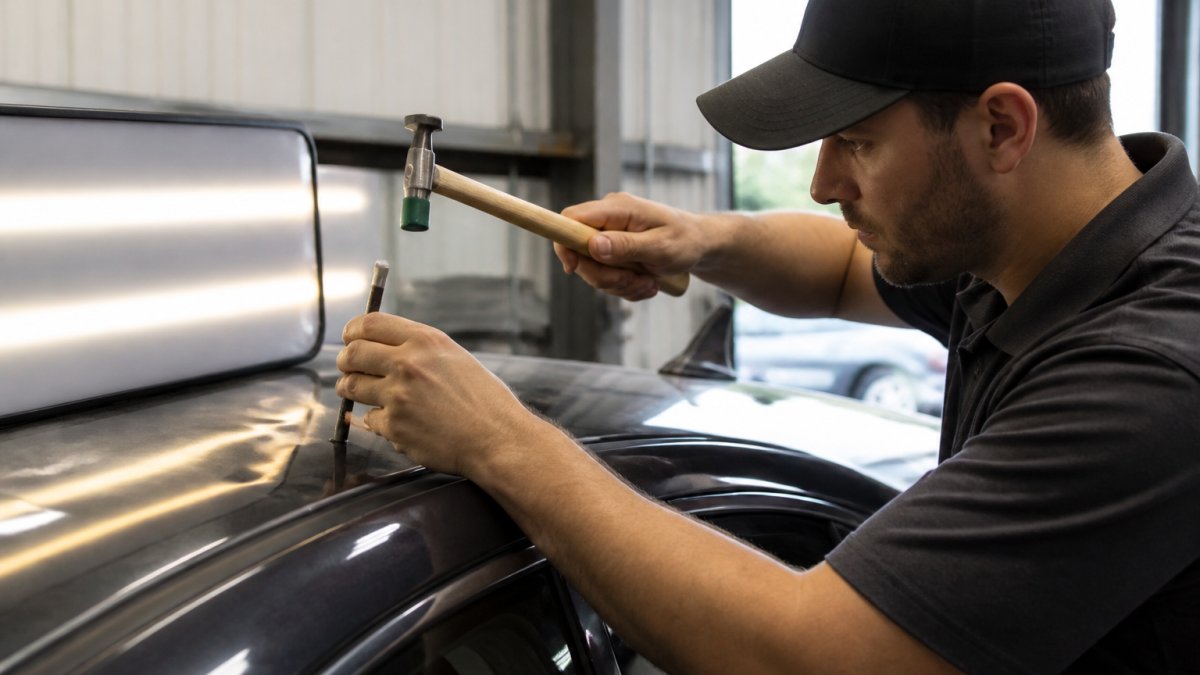
Paintless dent repair, or PDR, removes dents by massaging the metal back into shape from behind the panel.
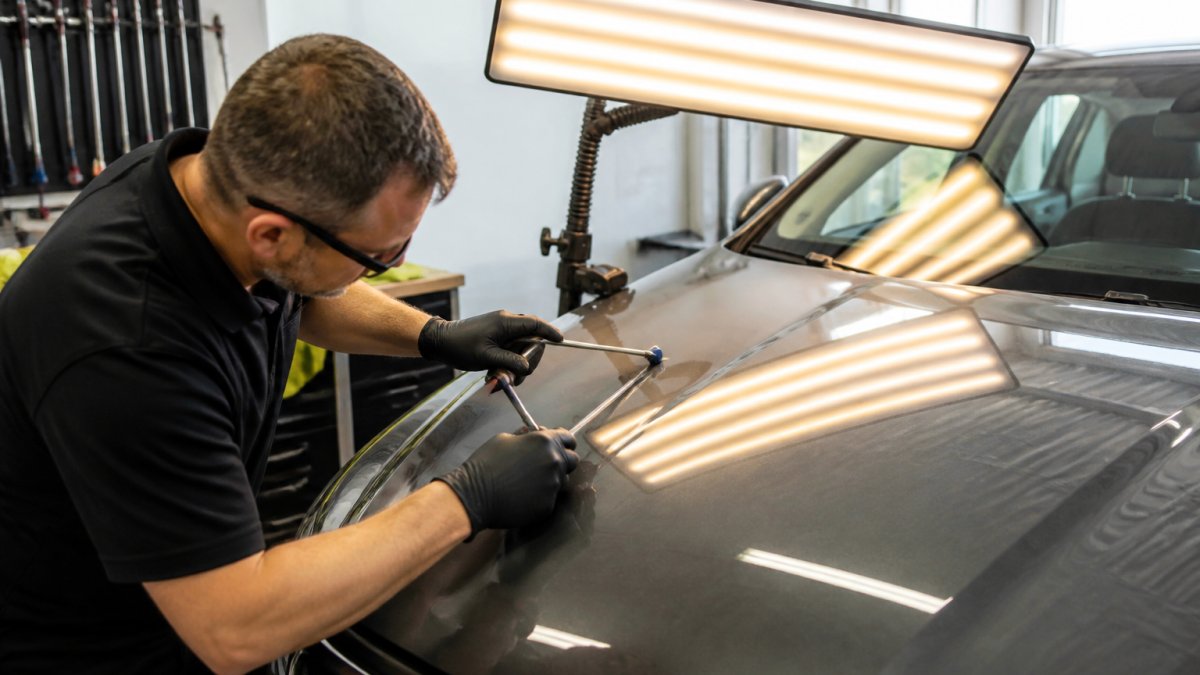
PDR falls short on creased metal, dents near panel edges, or any damage where paint has broken. Those cases need traditional bodywork and paint repair.
| Damage Type | PDR Eligible? | Typical Approach |
|---|---|---|
| Shallow dents, intact paint | Yes | PDR, same-day possible |
| Medium dents, no creasing | Yes | PDR, 1-2 days |
| Creased or stretched metal | No | Conventional bodywork |
| Cracked or chipped paint | No | Bodywork plus paint repair |
| Dents on panel edges | Sometimes | Case-by-case assessment |
If a shop promises PDR on every dent without inspecting first, treat that as a red flag. The honest answer depends on what the light board shows.
Hail Damage Repair Time: What Determines How Long You Wait
Hail damage repair time depends on three things: dent count, whether PDR or bodywork is needed, and how backed up the shop is after a storm. A single-panel PDR job can finish in a day; a full-vehicle repair with hundreds of dents can take several days or longer. Conventional bodywork and paint on multiple panels can run into weeks, because paint has to cure between stages.
Here is a realistic breakdown by damage level:
| Damage Level | Typical Dents | Likely Method | Typical Turnaround |
|---|---|---|---|
| Light | 1-20, one or two panels | PDR | Same day to 1 day |
| Moderate | 20-75, several panels | PDR | 1-3 days |
| Heavy | 75-200+, most panels | PDR, sometimes with panel removal | 3-7 days |
| Severe | 200+, creased metal, broken paint | PDR plus conventional bodywork and paint | 1-3 weeks or more |
These are working ranges, not promises. A shop that has to order parts, wait on a supplement approval, or coordinate with a rental company can stretch any of them.
What Drives the Cost
Hail repair pricing is usually quoted per panel or per dent, and the biggest variables are dent count and whether paint work is required. PDR is almost always cheaper because it skips materials, paint booth time, and sanding labor. Any panel needing conventional bodywork and paint adds significantly more.
Other factors that move the number:
- Panel access. Dents behind inner structures, in door jambs, or on roof rails take longer because trim or headliner has to come down.
- Metal type. Aluminum panels behave differently than steel and often require different techniques and more time (Cosmetic Repairs To Aluminum Exterior Panels).
- Paint condition. Existing chips, prior repairs, or failing clear coat can turn a PDR job into a paint job.
- Vehicle size and roof complexity. A large SUV or truck with a long roof and a sunroof takes more hours than a compact sedan.
- Insurance scope. If the insurer’s approved estimate is lower than the shop’s, the difference has to be resolved before work starts, which adds calendar time even if it does not add labor.
Get a written estimate that lists panels, dent counts, method, and a target completion date. A verbal “a few days” is not a schedule.
Why Post-Storm Scheduling Collapses
After a major hailstorm, every shop in the area gets busy at once. Ask how many vehicles are ahead of yours and get a realistic date.
After a severe storm, inspection slots often fill within 48 hours and repair slots within a week.
The fastest way to shorten your wait is to book your inspection immediately after the storm, even before you file the claim. Inspection slots fill up first.
For fleets, volume changes the math. A shop that can process a dozen vehicles without splitting work across locations saves weeks of downtime. Ask whether it can stage vehicles on-site, handle insurance paperwork for each unit, and provide loaner or rental vehicles in parallel.
Rental Cars, Storage, and the Hidden Time Costs
Two things eat time drivers rarely plan for: rental availability and storage. After a storm, rental fleets are depleted, and your insurer’s daily cap may not match what is available. Confirm your rental coverage limit before dropping the car off, and ask whether the shop provides a loaner directly.
Storage matters if your vehicle is not drivable or the shop cannot start immediately. Ask where the car will sit, whether it is indoors, and whether storage is billed. Indoor, unbilled storage is a real advantage after a storm.
How to Choose a Hail Damage Repair Shop You Can Verify
Choosing a repair shop comes down to verification, not marketing.
Start with these checks:
- Confirm the shop has a real, visitable service location
- Ask whether technicians hold current certifications
- Request photos of completed hail repairs, not stock images
- Confirm they work directly with your insurance company
- Ask about rental vehicle options during the repair
- Get the estimate in writing before work begins
- Ask what happens if a PDR repair reveals hidden damage
A shop that answers all seven clearly is worth your business. One that dodges the certification or insurance questions is not.
For fleet owners, we handle volume jobs that would otherwise require shopping around to multiple shops. One point of contact, one schedule, one standard of work.
Drivers and fleet owners in Converse and San Antonio who want a verified local shop, a zero out-of-pocket path through insurance, and a rental car while they wait.
Hail season does not ask permission, and the shop you choose in the first 48 hours decides how the next two weeks go.
Frequently Asked Questions
What happens if your car is totaled from hail damage in Texas?
If repair costs exceed your vehicle’s actual cash value, your insurer may declare it a total loss. You would then receive a settlement for the vehicle’s value minus your deductible. Many vehicles with severe hail damage still qualify for paintless dent repair, which often costs less than conventional bodywork and can keep the car off the totaled list. Get a free inspection before accepting any total loss decision.
Can I fix hail damage on my car myself?
Small dents on flat panels can sometimes be improved with a DIY kit, but hail damage typically covers multiple panels, curves, and roof lines that require professional tools and lighting. Attempting repairs yourself can crack paint, stretch metal. Most comprehensive policies require a professional estimate anyway. A free inspection from a certified shop tells you whether paintless dent repair applies before you spend money on tools that may not work.
How does paintless dent repair work for hail damage?
Paintless dent repair for hail damage uses specialized rods and tools to push dents out from behind the panel while preserving your factory paint. Technicians work under reflective lighting to see every dent and use glue-pulling on areas where back access is limited. The process keeps your original finish intact, which protects resale value and avoids the color-matching risks of repainting. It works best on dents without cracked paint or sharp creases.
How long does auto hail damage repair usually take?
Hail damage repair time depends on dent count, panel access, and parts availability. A few dents on one panel may take a day, while a full-vehicle repair with hundreds of dents can take several days to a week. Windshield replacement or conventional bodywork adds time. Shops that work directly with insurance and order parts early often finish faster. Ask for a written timeline before dropping off your car so you can plan a rental.
Can hail damage be repaired without repainting the car?
Yes, in most cases. Paintless dent repair for hail damage is designed to preserve the factory finish, so no repainting is needed when the paint is intact. If the hail cracked or chipped the paint, or if the metal is stretched into a sharp crease, conventional bodywork and paint repair may be required. A technician can tell you which panels qualify for PDR during a free damage assessment, and most hail damage falls into the PDR category.
